May Musings - 10
Today’s been a quiet day, well suited for the pace of this break and allowing for moments of reflection. It reminded me of the idea that the way we perceive time isn’t in the discrete seconds, minutes and hours of a clock, but in ‘experiences’. This explains why a holiday in a new environment can feel like it goes on for ages, while we can barely remember the discrete days of going to work, or school - they all blur into one ‘general’ memory.
***
Connected to the piece I shared yesterday referencing men and their lack of close friends, I found this article on Venture Capitalists backing companies that purport to have a mission around ‘creating connection’ and battling loneliness. Capitalism hates a vacuum, indeed.
As someone who has moved to three different cities in the past six years, I’m familiar with the challenge of moving to a new environment, and the difficulties associated with building close friendships, the kind that truly sustain you. To think that one could monetize that process seems… not only concerning, but in some ways missing the point of what friendships are built on: vulnerability, authenticity, respect.
The piece does differentiate between those who are temporarily lonely and those who are chronically so. Those who are temporarily so are looking for jump-starts to connections (something that is truly helpful when relocating to a city, especially as a freelancer without a pre-set social group to join), while the chronically lonely may find the process of overcoming social pain excruciating.
Placing someone whose brain is in overdrive into a social setting with strangers “could actually make things worse,” Cole says. These companies are attempting to address a clear societal need, but “we get confused by the hunger and what it’s for.”
Reading articles like this often deeply saddens me, as it seems like a uniquely unfair affliction in a world full of people. I often wonder how we can better design our societies so folk do not find themselves chronically alone, and question how such a cultural change would occur: is it about legislative change (don’t think so), economic change (potentially, given captialism’s role in our obsession with productivity above all, including relationships) or even changes in the religious institutions and expectations in a society? Bear in mind that these reports are often Anglo-centric. A cursory look online unearthed a few interesting reads on the capitalistic and Western nature of this ‘modern’ day phenomenon:
One of the more insightful pieces was on a favourite website of mine, Aeon:
The contemporary notion of loneliness stems from cultural and economic transformations that have taken place in the modern West. Industrialisation, the growth of the consumer economy, the declining influence of religion and the popularity of evolutionary biology all served to emphasise that the individual was what mattered – not traditional, paternalistic visions of a society in which everyone had a place.
The author raised an interesting point though that I hadn’t really considered (highlighting my own blind spot!)
Presuming that loneliness is a widespread but fundamentally individual affliction will make it nearly impossible to address.
…loneliness can exist only in a world where the individual is conceived as separate from, rather than part of, the social fabric. It’s clear that the rise of individualism corroded social and communal ties, and led to a language of loneliness that didn’t exist prior to around 1800.
It would appear that ultimately, the way we currently organise ourselves in the West will continue to produce chronically lonely people. The focus on the individual is damaging us: the individual as separate from the social fabric, as wholly responsible for and focused on themselves alone, and as primarily economic-value-producing assets - this individual is not set up for success.
Ah. It makes me grateful for having grown up in a household of religious and communal obligation (despite my grumbling at the time!) for at least I understood I had a place.
The question becomes, how does one maintain that place when you move? When you leave those bonds of community and obligation to a place nobody knows - or cares - who you are?
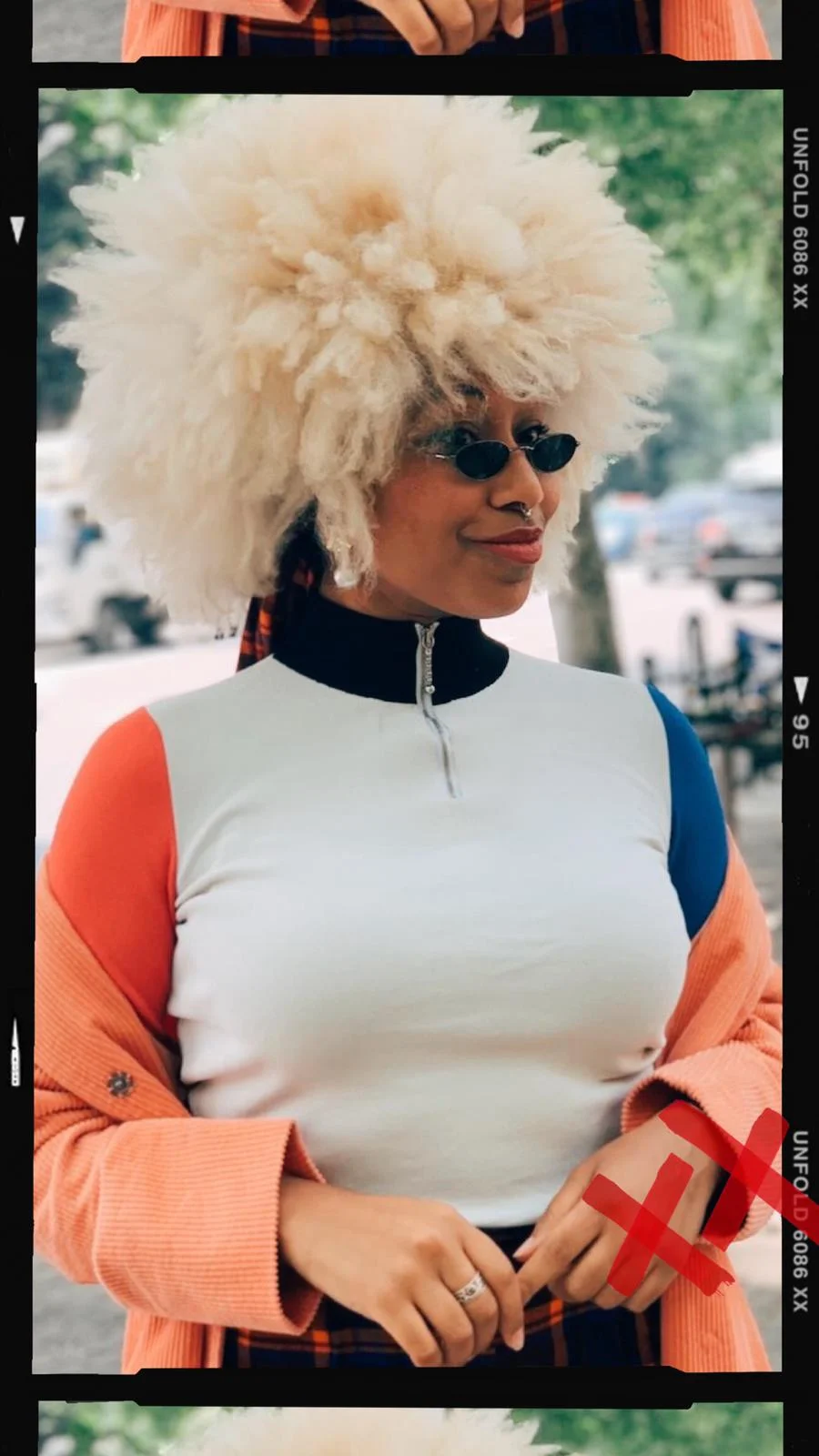
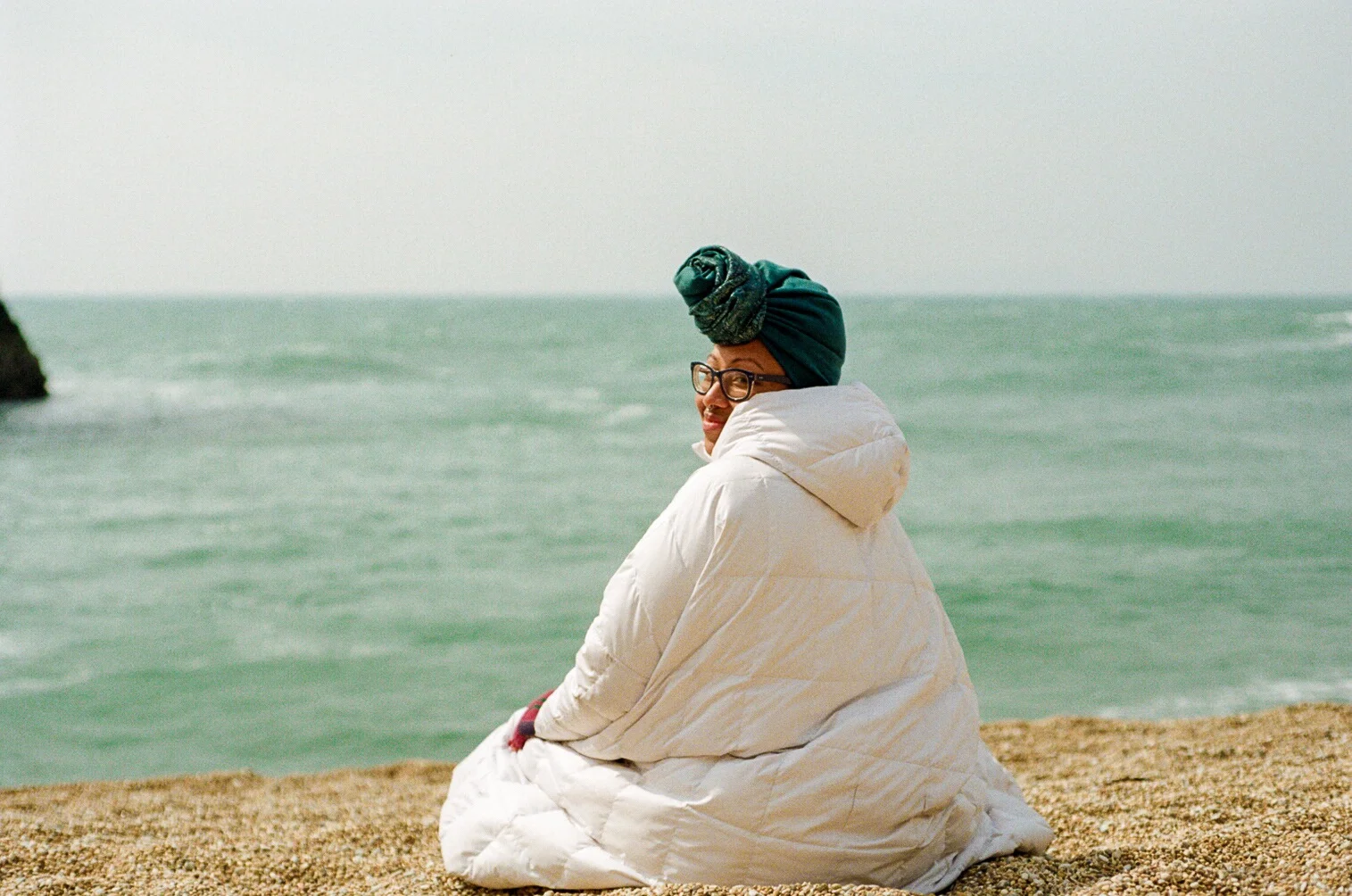
A question for another day, perhaps. In the meantime, enjoy this pic of me in my new hijabi hat: the Papakhi, the woolen hat worn by men in the Caucasus. Whaddya reckon? ;)

Not my actual hair.
May Musings - 09

My Best Tourist Self
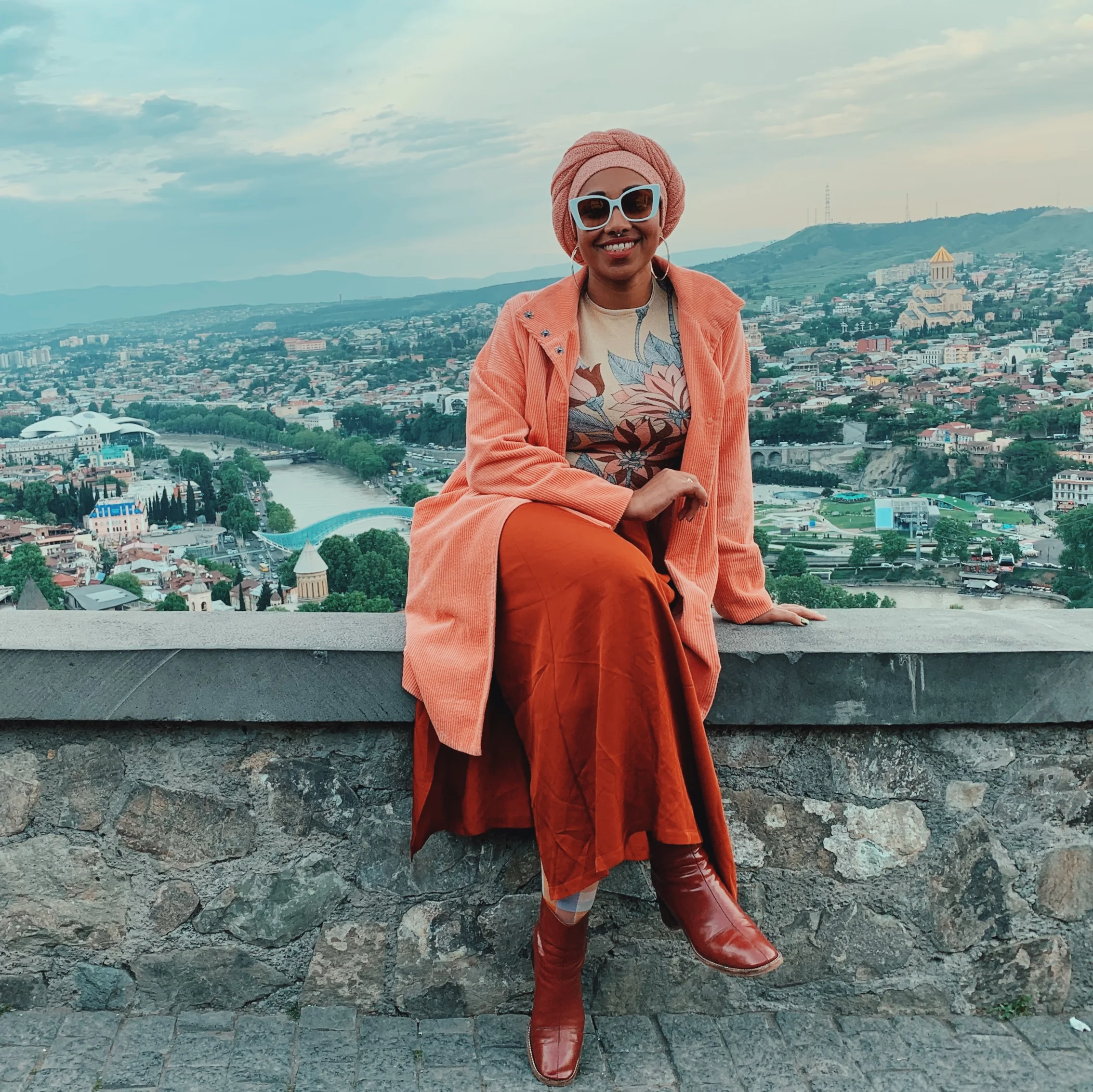
Day Two in Georgia, and what a delight!
Before I begin, I want to make an amendment. I was alerted by a reader yesterday that referring to Georgia as a post-Soviet nation may be seen as disrespectful, as it more acknowledges a political experience visited on the nation rather than the true ethnicity of the people themselves. As such, I’ve learnt, the ideal way to refer to the region is the Caucasus. Interestingly, it’s where the term ‘Caucasian’ comes from - so rather than the term simply meaning ‘someone who is white’, as I’d always imagined, it means ‘someone from the Caucasus’, a specific area between the Black and Caspian Sea.

Fascinating, right? It is also a reflection of my ignorance regarding this region’s history. It’s humbling to be reminded that although one may have deep expertise or knowledge about a particular part of the world, that knowledge is hyperlocalised. In my case, I am most familiar with the North African and Middle Eastern context, as well as Australia, but I’ve studied near nought about the Soviet Union, or the history of the Slavs, Central Asia or the Caucasus. This makes being here in Georgia particularly thrilling: learning about a totally different history feels like gaining an understanding of a completely different way of being in the world, in a way I’ve not previously understood possible.
It has also been interesting to notice that the tensions associated with travelling as a Muslim or a black person in Europe are virtually non-existent here. Obviously, it’s only been a few days, but the lack of hostility has been remarkable - until one remembers that their political history is markedly different. Georgia doesn’t have a history of African slavery, for example, or indentured labour from South Asia. Its tensions are related to Russia and the Soviet Union, and so it’s much less about colour and more about ethnicity, language, and ostensibly, politics. I’m curious to talk to Muslims and people of colour who live here though, so hold that thought until I do a little more digging…
All in all though - loving Tbilisi so far, and my, the Georgians are kind. Mashallah!
***
In other news, here’s a great read on Harper’s Bazaar on men, how notions of masculinity are toxic and how women have shouldered the burden for too long. If this is an area of interest for you generally, the article might not present new information but it does give a good overview of the changes underway (or needed!) for men to be their whole selves. It also sites a shocking recent British study which reports ‘2.5 million men admitted to having no close friends’. What a state of affairs indeed.
After several failed relationships, Scott Shepherd realized that despite being an empathetic, self-aware guy, he was still missing a key element to his emotional health: a few good (woke-ish) men.
The article reminded me of the many conversations I’ve had with my self-aware, male friends who enjoy speaking about personal and vulnerable matters with me, but have said they struggle to do so with their male peers. One hopes that, inshallah, these things are changing. However, it’s also one of the few areas that I personally - as a woman - don’t think it’s my place to get directly involved in. Yes, women can uphold the patriarchy and notions of toxic masculinity in many ways, but we will not be the ones to change it. I do believe men need to be brave and take the leap themselves. Other genders can support those who are driving the change, and help provide an environment amenable to it, but ultimately, the change needs to come from within.
What do you think? Are these changes something all genders need to be involved in driving, or should it be led by men?
May Musings - 08

Tbilisi, Georgia
I write to you from the city of Tbilisi, Georgia’s capital city. I’m on a rare excursion to a new country for the main purpose of pleasure rather than business: a privilege I treasure, Alhamdulilah, and one that I am lapping up with rich delight. It’s my first trip to a post-Soviet nation; an introduction to a whole new history which I know embarrassing little about. I look forward to that changing, inshallah!
Tonight won’t be the night I write about Georgia, however. Partially, this is due to only really having spent a few hours walking around the city, and what does one know of a place after only a few hours bar superficial observations like ‘people stare a lot’? I mean, girl - when you’re wearing bright mustard trousers and white sunglasses, what do you expect?
No. Today I write about two things on my mind. One, this brilliant article on the Castor Semenya case, written by a woman who formerly raced against her:
I competed for Australia in the 800m against Semenya at the 2009 World Athletics Championships in Berlin. Today I am convinced that the court of arbitration for sport’s decision to endorse rules aimed at excluding Semenya and other women athletes with naturally high levels of testosterone is the wrong one.
The author talks about how she initially was in favour of the decision to exclude Semenya, but later changed her mind, as a result of her sociology studies, an education in the history of these sorts of exclusions, and befriending women who have naturally high testosterone. Key was this final point, and it reminded me that nothing creates empathy and the potential to change minds like the deep simplicity of human connection. She goes on to say:
As a sociologist, I have now spent several years immersed in this issue, interviewing elite track-and-field stakeholders from around the world including athletes, coaches, officials, managers, team staff and media personnel. In their accounts I have seen so many echoes of my own experience in Berlin: an astounding lack of information, an absence of alternative viewpoints, a fear of the unknown, weak leadership from national and international governing bodies, and a stubborn refusal to dig a little deeper and reflect critically on where their views come from and what biases might be underlying them. The path of least resistance is to turn away from information and perspectives that might undermine one’s investment in the simplistic notion that sex is binary and testosterone is unfair (at least in women).
A worthwhile piece, I thought. Check the rest out here. What do you think about the decision?
***
The second thing on my mind is related to an experience from this afternoon at a local Georgian mosque. I had no idea I’d find one, given the country is largely Orthodox. Perhaps, I thought, they might have a hostile attitude towards other faiths. On the contrary, the mosque had a clear sign pointing to it from the main street in the old town, loud and for all to see. Off I traipsed, hoping to catch the Maghrib prayer before the time was up.
At the front of the mosque stood a man who I immediately understood found me an object of interest. I quickly queried the whereabouts of the women’s wudhu section and after providing directions, he followed up with asking whether or not I was married, where I was from, and whether or not there would be a chance of hanging out the next day. I learnt he was a football player who’d lived in the city for two years, but he had obviously found it tough, especially during a month like Ramadan. So I was sympathetic to the idea that he was looking for friends. But it was also clear that he was interested in more, and this was a sentiment I neither shared, or was willing to entertain.
Herein lies the rub: in a simple world, I’d love to be able to help a Muslim brother out. I’d love to feel like I could make connections with folk on my travels who share the same faith and the same love of a football club (Liverpool!). But so often, I find myself forced to choose between my urge to connect with a fellow from the Ummah and my safety as a woman. Even more tragic is when the individual is a man of colour, as this man was, because my urge is to think well, life in Georgia must be lonely, and it’s hard to find community at the best of times…!
Ah, the interaction underscored the complications of living at intersections. It reminded me why the concept of intersectionality is so useful. Intersectionality names the challenge of say, being an Arab speaking, black, Muslim woman. The culmination of all these identities reveals that an appraisal of the world through each one of those lenses alone is not nearly enough to understand it’s complex lived reality.
***
In the end, I bid the man a farewell and kept him in my prayers. That’s all the capacity I have for the moment. Khair, inshallah. But it’s certainly a stark reminder of how much longer we have to go.
***

The old town
May Musings - 07
When a person with privilege is uncomfortable talking about the issues in which they enjoy said privilege, it’s known as fragility. For example, white folk uncomfortable talking about race, or able bodied folk uncomfortable discussing disabilities. However, I’ve recently found myself uncomfortable - or somewhat resentful strangely - on all the discussion around the environment, and I’m trying to figure out why. Is it a erroneous sense of entitlement? Is it the privilege of not being directly impacted by the changes? It is a residual annoyance having come from a background of oil and gas, with years of friends telling me what I was doing was evil? I’m not sure.
It’s also not to say my behaviour hasn’t changed - I use less plastic, own a keep cup and metal straw, rarely eat red meat and don’t own a car - so my daily habits reflect an environmentally considerate ethos. But something about the conversation rubs me up the wrong way and I just can’t figure it out.
Maybe, it’s because it’s a reminder that there’s none to blame but ourselves?

I promise, I love the environment. Me in Switzerland pretending to be in the Sound of Music.
May Musings - 06
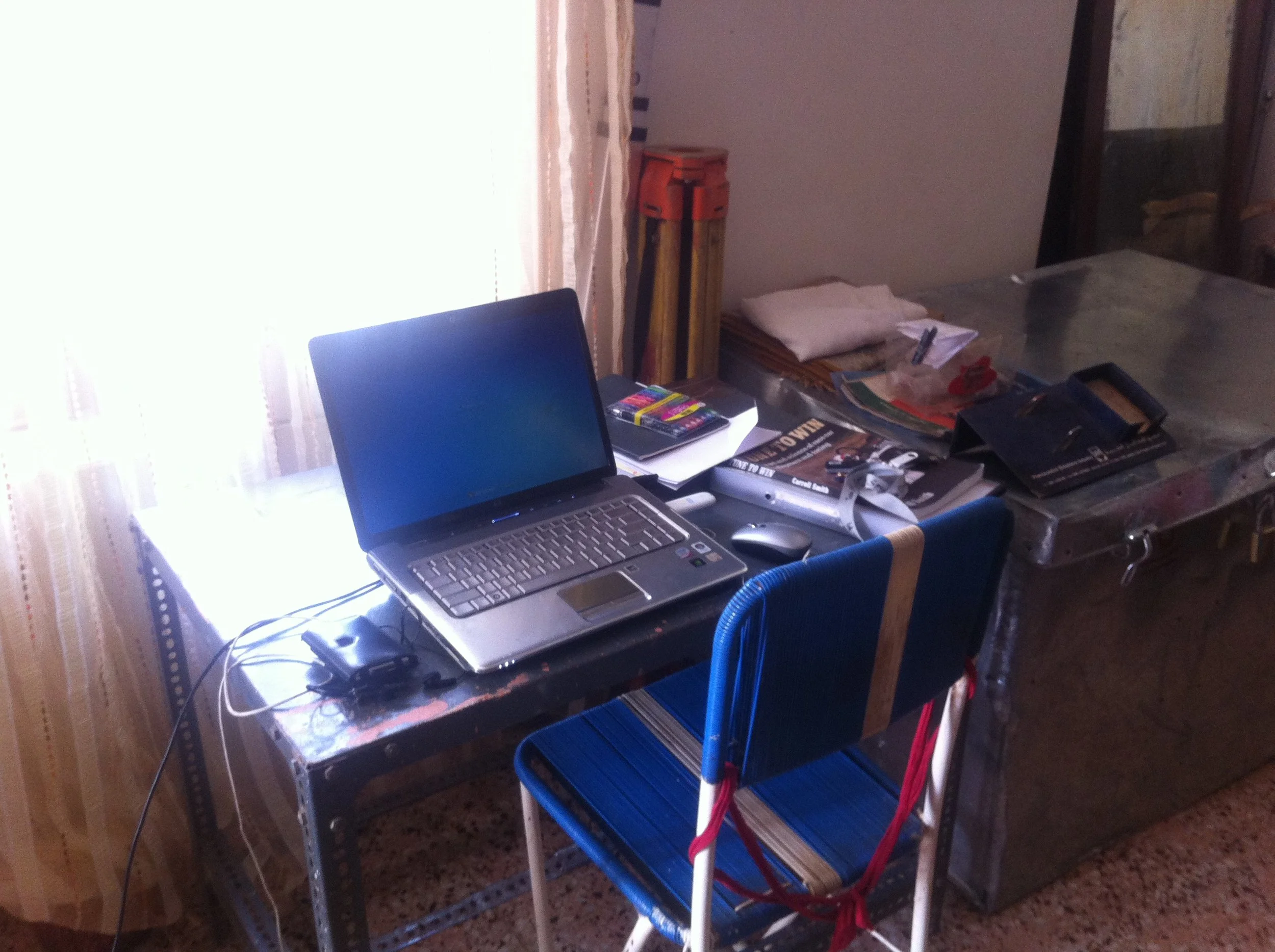
Where I did my blogging and studying while living in Sudan, circa 2012.
How much is enough? When it comes to the big things in life: war, climate change, gentrification, the rise of fascism… how do you know when what you’ve fulfilled your obligation, looked after ‘your bit’, or done enough?
I’m going to write about something a little close to home today.
For those who may or may not know, Sudan is going through a process of major political upheaval right now. I was on the ground in Sudan, when protests first started kicking off in mid 2012 - that’s why I started this blog actually, to talk about what was happening and try get international attention. My blog ended up being frozen for some time, and folk who were writing online started getting raided and beaten, and so my family asked me to stop. I did - and I went back to Australia, to my professional life and to a diasporic existence that’s a little more complicated than turning up to the protests.
Come December 2018, and I hear about the people taking to the streets in Atbara. Things are kicking off. I am meant to be in the country, and my family asks me to refrain from travelling as the government is collecting anyone with a voice, anyone ‘making trouble’. My family isn’t politically connected per se, they wouldn’t be able to get me out easily of a nasty situation - and so I stay here in London, safe (Alhamdulilah), but wracked with guilt. Is writing an article or two enough? Is posting on social media enough? How much posting on social media is sufficient? Is raising money for the people who are in the sit-in enough? How much money is ‘enough’? If you have a platform (as I do, Alhamdulilah) what is your responsibility, and where does it end? Are you allowed to take a break? Is that cheating, lacking integrity, not good enough?
I don’t know the answers to these questions. I try to do what I can, in fits and starts, but never feel like it is enough. I wonder whether, on the few days where I haven’t checked the news on the uprisings, whether that is ‘self care’, or me choosing my privilege over my people. I wonder if it would be morally easier if I just put myself in the line of fire - metaphorically or physically - at least then, I know I have given everything I had…
***
Often, when grappling with challenges like this, I turn to faith. But I have yet to find an answer that soothes the guilt. Maybe in time, inshallah. But until then, yallah. How do you navigate this space? I have no answers yet, only a yearning… a yearning that I agree and appreciate self centers my moral struggle amongst a much more urgent conversation about a country’s political future! Ah - I guess that’s what a personal blog is for, right?
***
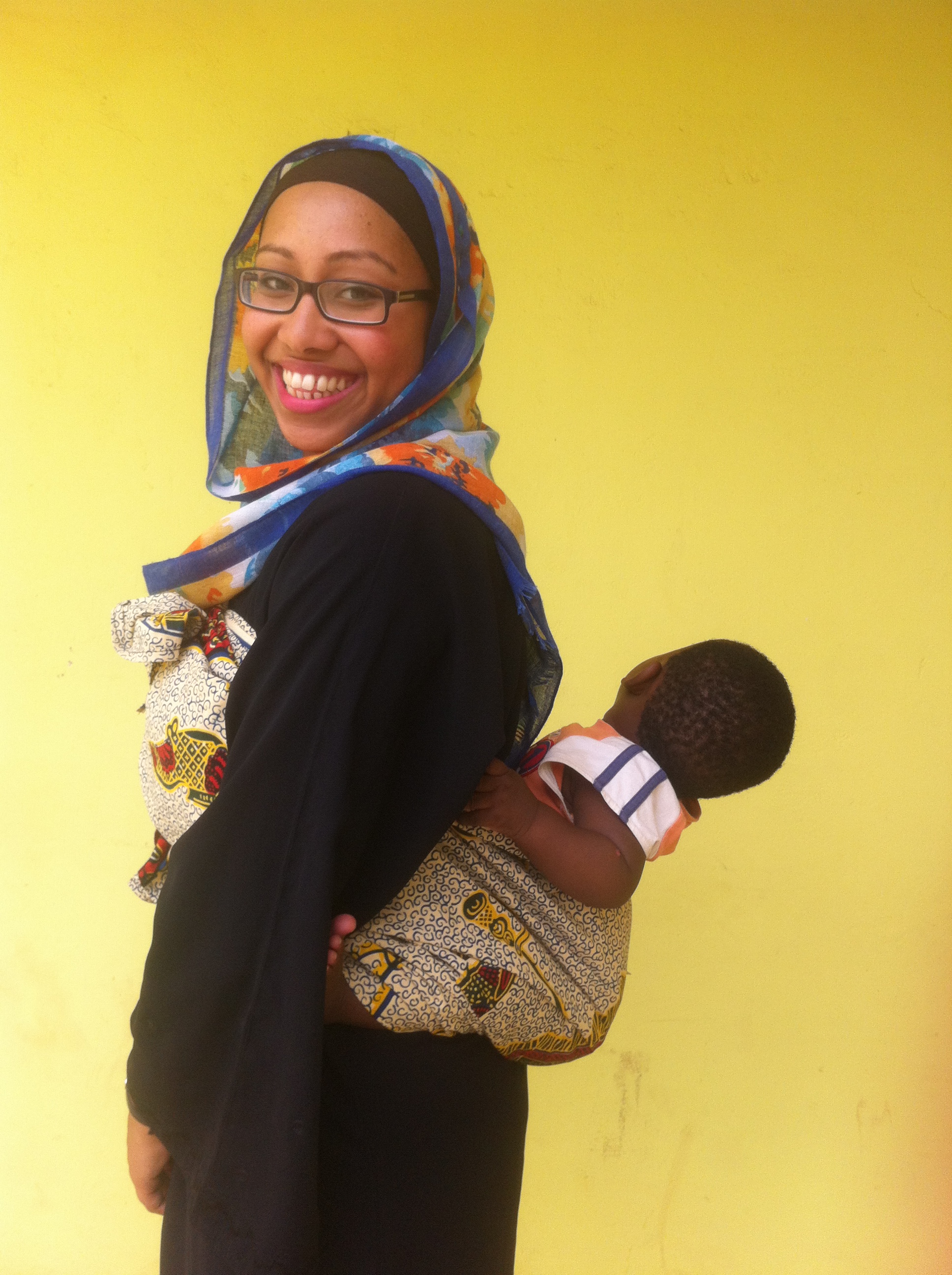
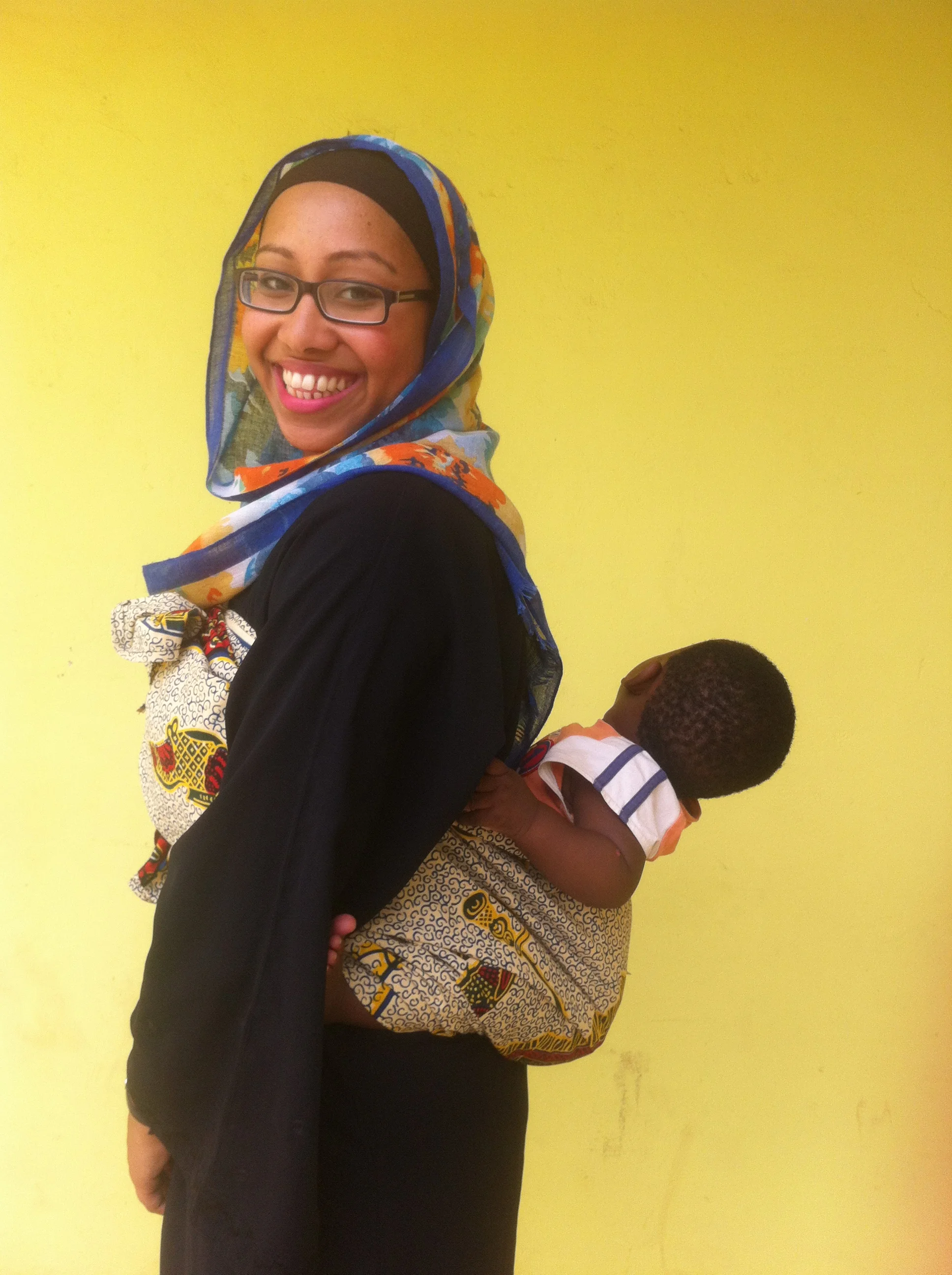
…that time I borrowed a baby.
May Musings - 05
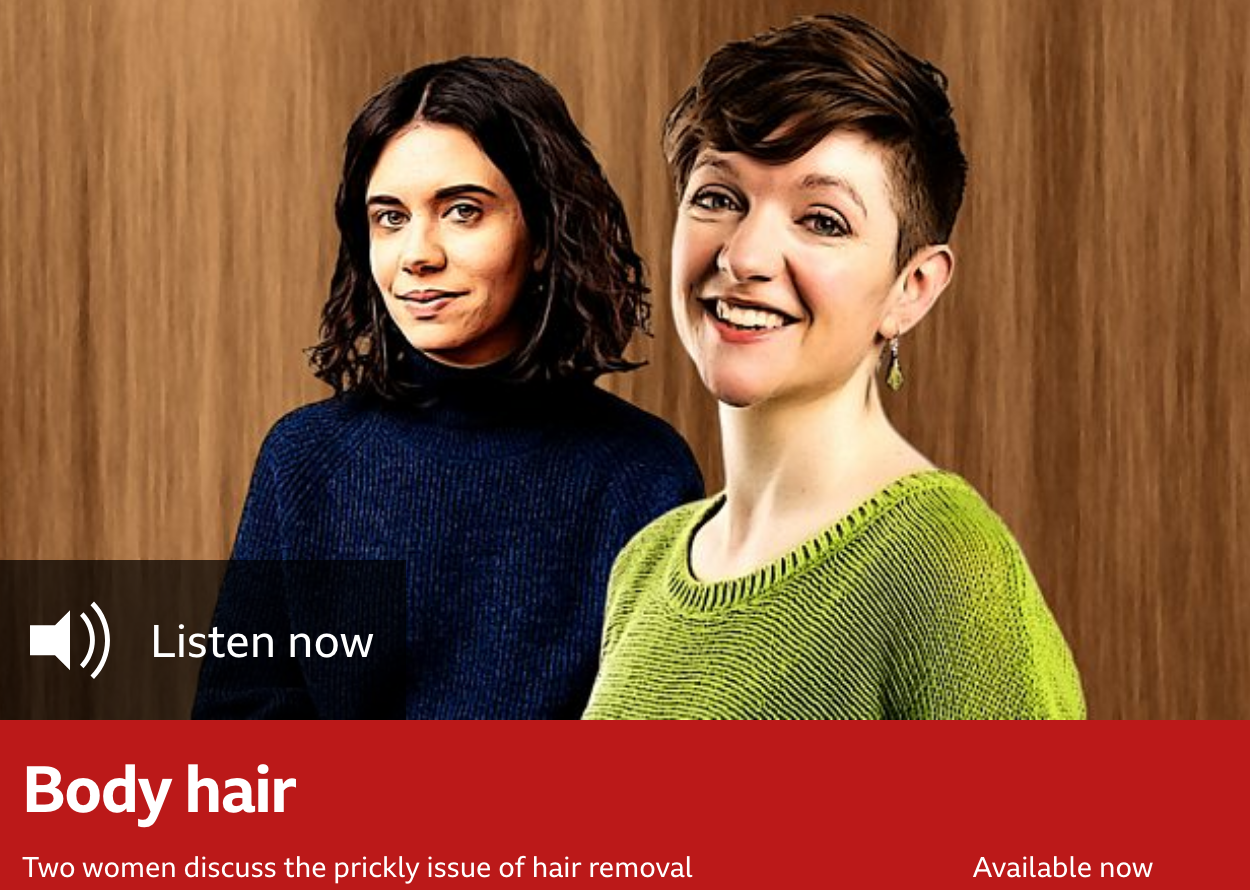
I’ve spent a lot of today knee deep in a couple of creative projects: one, reworking a script that I’m developing with the amazing Tania Safi called SAME SAME, and the other a more corporate podcast that I will be sharing soon, inshallah. I’m also stoked to share that my latest episode as host of the BBC World Service show ‘The Conversation’ was released today: on the politics of body hair. I talk to two different women, one Irish and one Turkish, about their relationship with body hair, it’s removal, and it’s relationship to feminism. Would love for you to listen and share your thoughts!

Click through to listen to the episode
How has everyone’s first day of Ramadan been? I’ve kept my energy expenditure low, and have bittersweetly welcomed that moment when you wake up and think - oh, I have all this spare time because I don’t need to eat or drink anything before I Ieave the house…
***
If today has taught me anything, it is in the importance of setting aside one’s ego in creative work. It’s a relatively new thing for me, in the sense that the profession I was trained in - engineering - is very much about numbers, an outcome achieved by following a set process that will allow you to arrive at the correct conclusion. ‘Creative’ or artistically creative work seems to operate quite differently in that we each need to find processes that work for ourselves and the specific thing we are working on at the time. Now, I may be creating a false binary here between the creative and the technical, but I certainly feel the shift.
The good news is, when you are able to focus on the work and not the ego, the outcome is invariably improved. Yallah, Allah give us strength to keep putting ego aside.
Khair, inshallah.

May Musings - 03
Oh, I really am just scraping in writing this at 10.45pm. Gotta stick to that daily commitment though!
***
Big day of themes today, folks. Binged watched Top Boy on my trip back from Malaysia to London, then ended up at a protest in the British Museum against stolen artifacts (I found my brethren, folks who love those anti-colonial jokes!) and wrapped it all up with a #SudanUprising solidarity fundraising event at Rumi’s Cave…
A lot to think about and process. Forgive me, as my thoughts are still scattered around the city…
***
A day like today makes me appreciate the diversity that London has to offer, and recognise the privilege I have to walk between various worlds within the city. Top Boy, a show I highly recommend, reminded me that privilege of identity fluidity - born of my parents’ choices and Allah’s blessings - was something not easily accessible by all. My brief and sardonic reunion with the British Museum reminded me of the institutional injustices that continue to rage around us, seemingly impenetrable to intervention by mere mortals. But the Sudanese event at the end of the day was a reminder that all institutions are fallible, and almost all empires fall. It also reminded me, as events like these so often do, that we are never as alone as we think we are. Whether that be one’s confusion as a member of the diaspora, struggling to chant in your mother tongue, whether it’s the isolation of depression and the battle in your own head or whether it is simply wondering what space you’re allowed to take up in a room or city… giving voice to that confusion and isolation has an almost chemically transformative effect. Suddenly, it’s not your burden alone. It is never your burden alone.
It is never your burden alone.

May Musings - 02
I write to you from a cafe like many other cafes I’ve sat in before: fast wifi, high ceilings, a choice of coffee beans from Colombia, Kenya or Ethiopia. Around me are a plush couch, and simple yet wonderfully comfortable wooden tables and chairs dotted around the mezzanine level, each seat conveniently placed next to a power plug for the many laptops people just like me a tap-tap-tapping away on.
It’s like any hipster cafe I’ve been in before, in Melbourne, New York, London or San Fransisco… but I’m in Kuala Lumpur, Malaysia. Instead of the sounds of trains and trams, I hear the clap of thunder momentarily cutting through the roar of the monsoonal rains, and I’m at once both intrigued and pensive about the ubiquity of the hipster cafe aesthetic. On one hand, I love that I can find a decent coffee in almost any city around the world (although some cities I have to work harder than others!). On the other, I wonder about the underbelly of the global ‘freelance’ lifestyle: on where, despite the believe that we are ‘alternative’, doing something ‘different’ and experiencing cultures and lifestyles outside our own, we still seek places that are familiar no matter where we are? I mean, I’ve found a hipster cafe and ridden a ‘Grab’ (Malaysia’s version of Uber) here - I could have just walked down the road to a street food vendor and camped out there, right?
But sometimes I think - life is already full of friction and challenge, full of meeting new people on a regular basis and seeing new things (I live in a new continent, after all!) - why not treat myself to something familiar? Jury is still out on this - how do you experience a new city that you travel to for work?
***
I spent a significant part of an hour reading this article on the Murdoch empire. Have you read it yet? The story of the Murdochs fascinates me, as much as it frustrates and in some ways, angers me - and so I finds exposes such as this compelling and enlightening. As the article suggests, the influence of Rupert Murdoch on Western (Anglo, shall we say) democracies cannot be overstated really. The question I am left with, is what do we do about it? Is it possible to build another empire in the same way, if one started today? Is it possible to build an analogous empire ethically, one bound by morals and a framework based on social justice? I’m not sure. I think these may be questions which scratch the surface of deeper philosophical queries to do with power and the reason one has for living… but alas. We’re only on day two on May musings, folks. Let’s ease into it, shall we?
Another article I found useful was this one in the Harvard Business Review on the true challenges of building an innovative culture. In some ways, it ties in with I was talking about yesterday re discipline.
Fascinating twitter thread on the breaking of the engima code and a reminder of how so often, no matter how well we design a machine, it comes down human error (or just, the human condition)?
I’m also on the Board of the Electronic Frontiers Australia and we’re doing a couple of profiles of folk in the tech industry in Australia ahead of the federal election. If you’re part of said industry and wouldn’t mind sharing a little about yourself, email Lyndsey here! Thank you!
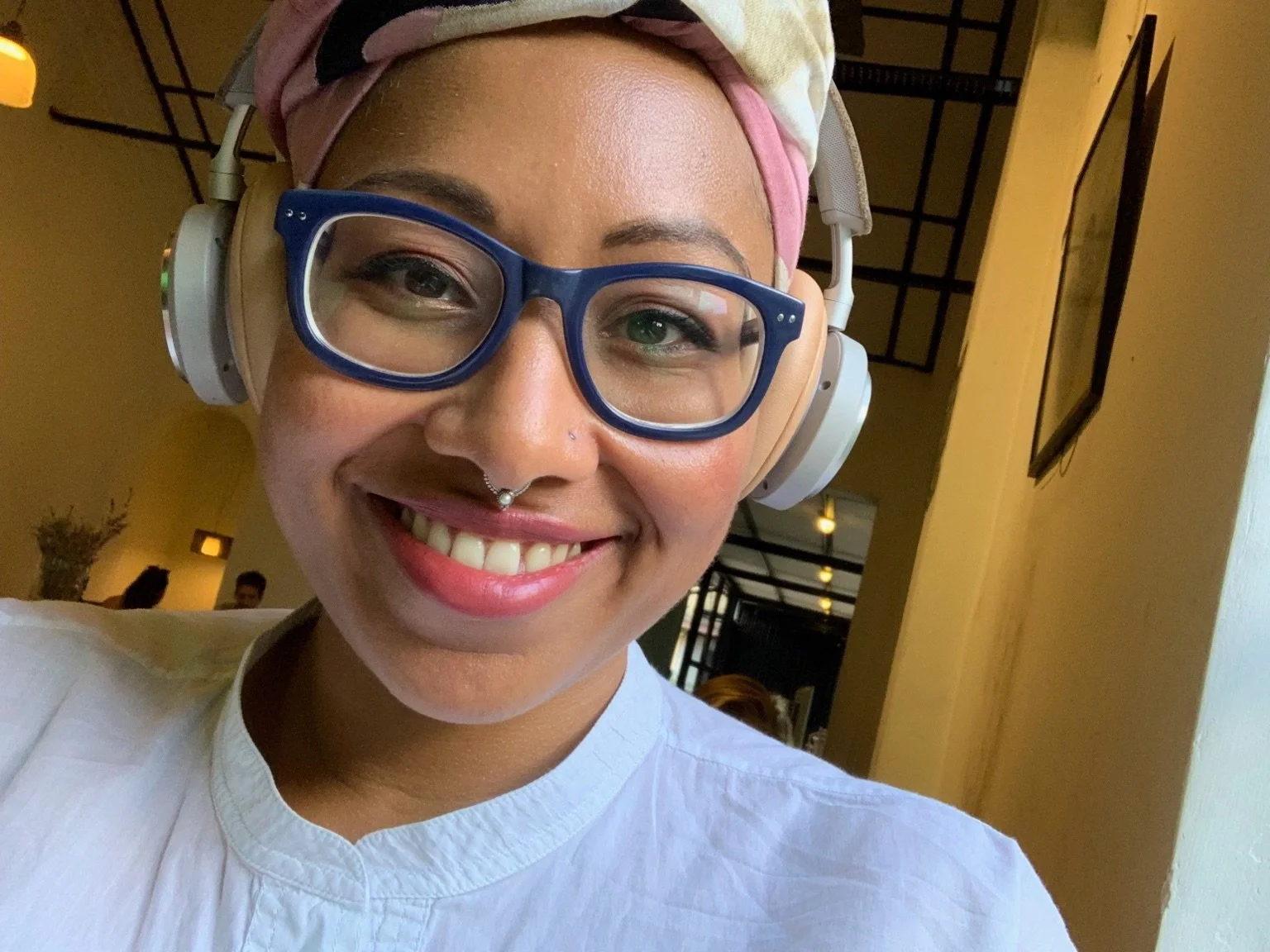
Fresh-faced selfie from said hipster cafe hashtag nofilter (is it glow, or a sheen of sweat? We’ll never know)
May musings
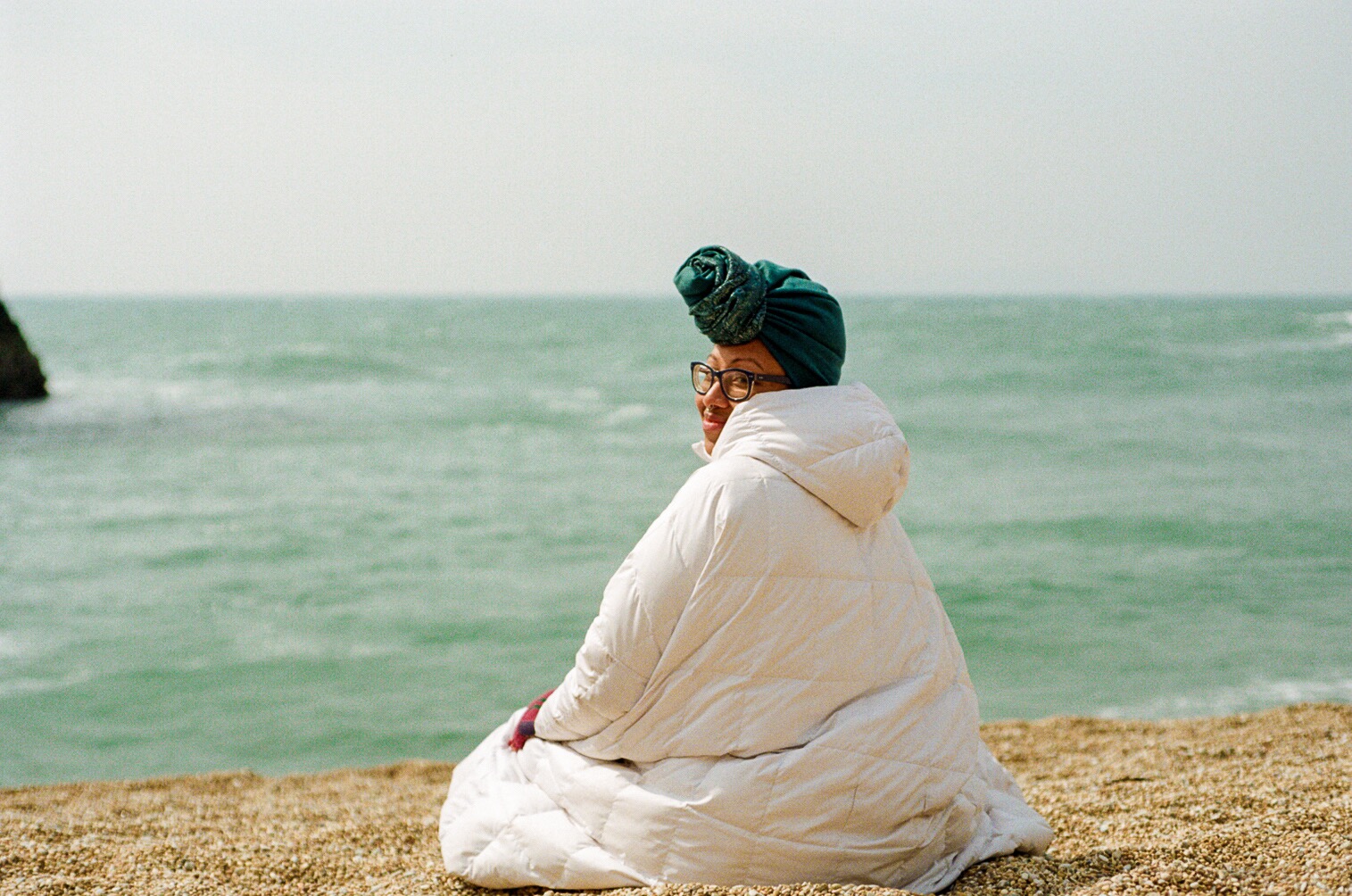
Chillin’ like a villian. A very warm, wrapped up villian cos it’s cold out, you know?
It’s been a long time since I’ve committed to any sort of ‘write every day’ challenge. While yes, that might be due to a lack of time, if I’m really honest, it’s more likely due to a lack of discipline. I find, like many others, the length of time it takes for me to complete a tasks depends on the amount of time I have at hand. Alas, I’m too flexible that way.
While lying in bed last night, after listening to approximately 10.5 hours of podcasts (the perks of travelling alone), Seth Godin’s voice popped into my ear. Not physically, mind - in that case, I would have had some serious questions for hotel security. No, I’d been listening to the American author on one of the podcast episodes I’d heard earlier that day, and something he had said stuck with me. Seth talked about his commitment to blogging every single day, and the discipline of doing so for year in, year out. I remember thinking at the time ‘ah, capitalism! Making us think that we all need to be productive, pff!’. But then my mother’s voice pipped up (cheeky!) with the counter argument. ‘Isn’t praying 5 times a day doing the same thing day in, day out, regardless of the weather or a bank holiday? Don’t make discipline about capitalism Yassmina, it’s not all about the problems in the system!’
Now, although I may disagree with my mother the appropriate moment to bring up structural inequalities, her imaginary voice did have a point worth paying attention to. Because, as much as it pains me to admit (and yes, this isn’t on brand) between you and me, sometimes I think I dismiss certain activities as ‘capitalist productivity hacks’ simply to indulge my inner sloth.
I mean, I love talking about how I’m not a morning person, and how all morning people really need to keep the joys of the morning to themselves. The irony is, of course, is that on the days I do deign to wake up early, I bloody love it! And I’ll damn well tell anyone within earshot. Ah, the goodness of the crisp morning air and, oh, the glory of empty streets. Hypocrisy, you say? Never heard of it! Is it the name of a new cafe? I’ve been known to roll my eyes at people who talk to me about their running schedules, but when I’m feeling fit and can do a 10km in under an hour I’m the best version of myself. And don’t get me started on yoga…
So why, and how? Why does some part of me rail so hard against personal habits that are clearly beneficial for people - including me!
Perhaps I just don’t like being told what to do. Inner rebellious child, independent woman, whatever - yes, that’s a part of it. But I don’t think it’s the whole story. If I would hazard a guess, it would be the lack of humility that seems to come with the cult of productivity (I can hear my mum’s voice telling me to reign it in again…).
Hear me out though. Muslims praying five times a day could re-frame their practice as a productivity hack for sure: get up early (before the sun comes up), do your meditation, then start the day. Move your body in a smooth fashion, kinda like yoga, five times a day. Focus. Breath. Exercise. You know? It’s the perfect package. But the way it’s talked about in faith is completely different to the way similar practices are talked about in the culture of the tech/productivity/start up world. In faith, it’s seen as a personal thing, a private invitation, not a competition or a challenge. It’s not a matter of worth, it’s more a matter of practice, coupled with a reminder that your time on this earth is short, and that you exist to serve. That comes with quite a heavy dose of humility, you know?
***
So that all being said... I’m here to tell you that I’ve committed to writing a blog post every day this month (is the joke on you, or on me, I’m not sure!). It’ll probably be random (like this), but in an effort to get myself off twitter and writing more than an instagram caption length, I’m hoping this will be a space for me to get my writing juices flowing again, inshallah. Also, it’s going to be Ramadan, so I need some ‘inside’ activities to keep me busy.
Let me know what you want to hear about. I can share links to what I’m reading, thoughts about current affairs, what I’m up to and where I’m at.
Bismillah… here we go!
***
Oh before I leave - here are some interesting pieces that I’ve read recently that may tickle your fancy.
The Friendship that made Google Huge

Guardian Essay: I wanted to make jokes about my destroyed career, but all I felt was grief
Ushered out of my job, my mental health spiralling, reputation in shambles, I felt a deep, cavernous sense of loss for my once optimistic self.

I recently spent some time in my childhood home of Brisbane. As we drove around the soft bend leading up to my family’s double brick house, I couldn’t help but reminisce. I’d travelled on this road many a time on almost all forms of transport: driving in my new Alfa Romeo at 3am in the morning, sneaking back into the house from a late-night session (and by session I mean study session, OK? I was an actual certified nerd), walking to the bus stop when that Alfa Romeo lived up to its reputation by inevitably breaking down, and running 2km loops around the block when I was in that short-lived “maybe-one-day-I’ll-do-a-marathon” phase.
Sitting in the passenger seat of the family car, my younger brother grown and behind the wheel, watching the familiar houses and trees glide by, I grew nostalgic.
How was 15-year-old Yassmina, running around this block, to know that a decade later, these streets would hold more than simple, happy memories of early morning jogging sessions accompanied by the soundtrack of feet lightly padding along the pavement, neatly wrapped in the still silence of suburbia?
How was 20-year-old Yassmina to know that five years later, her hard-won engineering degree would be the last thing that people knew about her, not the first? That six years later, she would have walked away from her dream of working on a Formula One team, ushered out of her job on an oil rig, squeezed out of her newfound role as a TV broadcaster, her mental health spiralling, reputation in shambles, and with a Wikipedia page that mostly talked about “controversies”?
How was 26-year-old Yassmina to know that a year later she would be returning to the country of her citizenship to eulogise a career she didn’t even know was coming to an end?
As my brother parked the black Honda Civic, I was overcome with a tidal wave of heaviness, a blanket made of lead that seemed to smother my soul. There was a strange metallic taste in my mouth that I couldn’t quite name, and it wasn’t until I lay in my bed that evening, the single bed I had lain in every night for over a decade, that it hit me. Moonlight was shining through the blinds, glinting on tears that threatened to spill. The weight was more than just jet lag – I was in mourning. What a strange feeling indeed.
I could feel my face furrowing as I tried to make sense of my emotions. I swallowed, allowing my tears to run down my cheeks and turn the pale pillow cover a darker shade of blue, and I attempted to reckon with reality. What was this deep, cavernous sense of loss that had opened up in my chest? What was this ache in my lungs, making every breath feel like I was drowning, trying to take in air through a snorkel that was rapidly filling up with water? Why did this whole house, this whole street, this whole city now feel foreign to me, like it was only a place I’d visited in my dreams?
This was grief, but it was not just my career I was grieving. I was grieving my past self. It was the baby Yassmina I had lost, a resolutely positive and perhaps blindly optimistic young person, a soul unburdened by the knowledge of what the world does to people who don’t quite fit the mould and who want us all to be a little better. I had lost an innocence I didn’t even know I had.
Is it better to have been innocent and lost it, than to not have been innocent at all? In all honesty, I don’t know.
I wanted this eulogy to be funny. I wanted to bid farewell to a Formula One career that waited for all the lights to turn on but never quite got off the starting mark. I wanted to say goodbye to a professional engineering pathway that many don’t know the details of, but that makes me very proud. I wanted to commemorate a broadcasting job that took us all by surprise, as it turned out that I was halfway decent at it. I wanted to talk about the highs and the lows, the bits that make me laugh, the times that gave it all meaning. And there are lots of those moments. But when I sat down to write this eulogy, all that came out was grief.
‘How was 20-year-old Yassmina to know that five years later, her hard-won engineering degree would be the last thing that people knew about her, not the first?’ Photograph: Alamy Stock Photo
It poured out of my fingers and soaked these pages, like rainwater in a drought-stricken desert. It’s actually annoying, really. I’m quite tired of this grief business. I thought I had bid farewell to this traveller. But grief is a visitor that overstays its welcome, and no matter how much subtle hinting at the time, it’s still splayed out on your couch, eating nachos and getting guacamole on your carpet. Turns out grief does what it wants, and pays no attention to schedules or social niceties.
Grief will turn up when you least expect it – you’re on your way out to a dinner date, and ding-dong, there it is, at your door, walking in uninvited. You’re having lunch with friends, and then poof! It apparates next to you and dominates the conversation for the next hour, paying no attention whatsoever to what you were talking about before. Hell, you could be watching Happy Feet 2 on a plane, and grief will pop out of the oxygen compartment above, wave its hands in your face and make you miss the rest of the damn film. Not that I’m speaking from experience or anything.
Part of me also doesn’t want this eulogy to be about anything at all, because that would be admitting that those past versions of myself are gone. Done, dusted, finito. I’m not sure I’m ready for that. Are we ever really ready to let go? That’s the thing about death. It’s kinda like grief. A terrible houseguest. It just turns up, and you’re expected to have the kettle on and the right kind of biscuits on hand. I mean, c’mon man. Cut a sister a break! Send me a calendar invite or something at least, so I can make sure I’m presentable. But no. Death, pain, grief: the bloody three musketeers that they are, they give zero fucks about your plans. It’s brutal, but I guess it’s the only way to ever really level up in this life. If you don’t know, now you know, sister.
My past lives might be dead but I am not. I’m very much still alive, and that is a gift that I cannot bear to waste
In Islam, when someone dies, we say “Ina lilahi, wa ina lani rajiun”. It roughly translates to: We are for Allah, and to him we shall return. I wondered if I could apply this to my past self, or my various iterations of careers, and then I mentally slapped myself for my indulgence. Girl, get a hold of yourself! You ain’t dead yet! This is eulogy for your career, you indecisive millennial, not you. You’re still here, alive and kicking Alhamdulilah, no matter how much some may wish otherwise. So act like it.
I got an Instagram direct message on Friday, just before I got the plane from London to Australia. It read as follows: “My Name Is Nelson, and I’m a big fan. Do you mind if I ask just one favour? Please Reply, I love You.”
Then: “Go to Flinders St Station, Cut Your Wrists and Let them bleed out so we can all watch you die. Lest We Forget. Hopefully I’ll be able to distinguish you from all the other Sudanese Niggers, but I know you’ll be the only ape wearing a ridiculous towel over your head.”
Nelson, I’m sorry to inform you that this specific favour will not be granted, darling boy, though I may be wearing a ridiculous towel on my head, because well, that’s very on-brand. My past lives might be thoroughly dead, cooked, roasted, their remains served on a platter for all to feast on, but in this moment, I am not. I’m very much still alive, and that is a gift that I cannot bear to waste, and in the words of the great Hannah Gadsby, there’s nothing stronger than a broken woman who has rebuilt herself.
I now think of the death of baby Yassmina as a controlled burn, in the tradition of the First Nations people who are the custodians of this land. They understood that sometimes for change and regeneration, you have to raze the existing growth to the ground and let the new take root. And oh, yes, those flames are searing and yes, sometimes, I still hear the crackle and pop of burning flesh.
But I’m starting to get used to it, as my careers have a habit of going up in flames. So why do I keep playing with fire? Well, perhaps my previous analogy was slightly off. This is no controlled burn, no regenerative wildfire. It appears that I live in a burning house. Death lives down the road, pain is my roommate and grief is always turning up uninvited. But we’re friends now. We bicker, we fight, we make each other laugh. And I wouldn’t be who I am today without them.
So bye-bye baby Yassmina. Bye bye, straighty-180 engineer, toothy-smiled TV presenter, giggling Good Muslim Girl who thought that her trio posse of innocence, positivity and optimism were all she needed. I’ve got new friends now. But your old friends are welcome to visit, of course. Maybe, maybe they can even stay. Maybe, we can get to know each other. Come through, I’ll put the kettle on.
This is an edited version of a speech given at the Melbourne writers’ festival event, Eulogy for my Career, on 26 August
Crisis support services can be reached 24 hours a day: Lifeline 13 11 14; Suicide Call Back Service 1300 659 467; Kids Helpline 1800 55 1800; MensLine Australia 1300 78 99 78

The Guardian: Is taking down white men like Josh Denny always a victory for equality?
Humiliation, belittlement, dehumanisation: these are the tactics the oppressor uses. We need to be better than that.

This was originally published on The Guardian.
Those with the highest levels of privilege are often viscerally afraid of losing it. It’s the fear that if they relinquish power, the tables will turn on them, the terror that they will become the oppressed. This anxiety is not completely unfounded. If we’re honest, no one is above being corrupted or is immune to subjugating others, not even those who have been structurally oppressed for generations.
So, if you’re part of the fight for equality, as I am, how do we make sure that we’re working towards a world that would be good for all, rather than just the group we’re part of?
I was mulling over these questions following a Twitter exchange with the comedian Josh Denny. He said that the phrase “straight white male” was this century’s “N-word”. Many, including me, pointed out that this statement betrayed a lack of understanding of history and context. However, Denny seemed to understand the danger of being dehumanised, given the disastrous impacts of this process throughout history.
He argued: “We have to be better than that. Use our words and our minds and our hearts to win arguments. Not by trying to dehumanise the opposition to your beliefs. No matter who you are.”
It’s fairly obvious to those with an understanding of history and power structures that the term “straight white male” does not carry the same baggage as the N-word – or the same tragic outcomes over particular members of society. It is a false equivalence. However, despite his history of racist rhetoric, the root of Denny’s concern should not necessarily be dismissed. This is not about him really, but about the very real pushback to the many equality movements today, whether it’s #MeToo, diversity and inclusion efforts within companies, or any mention of quotas. Many like Denny – straight white men – feel the ground shifting beneath their feet and seem terrified of what is to come.
Yo, no. https://t.co/WHRk02gK2j
— Yassmin Abdel-Magied (@yassmin_a) May 19, 2018
Don’t get me wrong. I’m not in favour of prioritising the feelings of those straight white men, or about how we manage the discomfort that those in power are feeling. Not in the slightest. I am more than happy to call out the powerful, name prejudiced behaviour, highlight hypocrisies, and point out the structural inequalities that inform society. Acknowledgement is the first step towards change. However, as the ground shifts, we have a window of opportunity to shape the landscape of political discourse.
First, we must interrogate our intentions. I’ll be the first to admit, there is a certain satisfaction that comes from delivering the perfect Twitter takedown. Who doesn’t love the dopamine hits as the likes, re-tweets, and gifs of standing ovations flood in. It feels good to be right, and to have your community reward you for it. However, there is a discernible difference between naming bad behaviour with an intention to educate and calling things out with the aim – conscious or not – of humiliation.
Second, once those who benefit from the status quo have their power equalised, how will they be treated? Does the use of terms such as “straight white man”, “gammon” and “centrist dad” to humiliate or belittle indicate a level of dehumanisation, that could become dangerous once power shifts out of their hands?
Paulo Freire, the Brazilian educator and theorist, explores these themes in his 1968 book, Pedagogia do Oprimido (Pedagogy of the Oppressed). “The oppressed, instead of striving for liberation, tend themselves to become oppressors,” Freire observes. There is precedent for this reversal, and it could be argued that a shift where the oppressed and oppressors share power equally is much more historically unprecedented.
“The oppressed find in the oppressors their model of ‘manhood’,” the Brazilian theorist further posited. If this concept is extended to contemporary society, the implication is clear: those who are currently oppressed take their cues on how to exercise power from those holding the reins.
If we are to truly transform society, we must resist the temptation to lower ourselves to the methods of dehumanisation that have been used to exercise power and control. What does that actually mean? Well, we have to be better than those who currently hold power, finding ways to be generous and to be kind – even if it’s going to be hard work.
That’s the work of change. It’s about taking a breath before slamming the next Josh Denny on Twitter, and instead choosing to have an actual conversation. This isn’t about centring straight white men, because I don’t have time for that. This is about honouring ourselves and making sure we are building the best society for us all. It won’t be easy, but I truly believe it’ll be worth it.

Tyranny and Free Speech: Essay in The Saturday Paper
“The colliding of opinions will only lead to the emergence of truth if the force behind both is equal, if the playing field is level, if there is a commitment to truth rather than to an agenda that is self-serving.”

This was originally published in The Saturday Paper.
Call it mass cognitive dissonance. All around us, the loudest proponents of free speech, in politics and the Australian media, are in many ways the most flagrantly hypocritical. These actors set a dangerous precedent: by refusing to acknowledge their double standards, and by bullying and harassing those who disagree with their version of the truth, they become the very tyranny they claim to stand against. The hypocrisy is so blindingly obvious that it is almost comical to point it out. It is as if the mere act of highlighting something so clear diminishes the identifier, rather than the perpetrator.
Let’s zoom out for a moment and take the broader view. What is the point of free speech? A concept talked about so readily, debated so passionately and defended so feverishly, in many ways benefits from an ambiguity of purpose when discussed. Is it the pursuit of truth or the freedom to offend? Each ardent defender sees in the concept what they choose. Is one purpose more noble than another? Why is free speech shared so unequally? And why is it that freedom of expression seems to enjoy an elevated status above all other rights?
The concept of free speech is so deeply misused and misconstrued in our public discourse that a key fact is often obscured: freedom of speech in Australia is not explicitly protected. Arguably the only Western liberal democracy without a bill of rights, Australians have an implied freedom of political speech. There is very little protecting us from the consequences of “free speech”.
“The colliding of opinions will only lead to the emergence of truth if the force behind both is equal, if the playing field is level, if there is a commitment to truth rather than to an agenda that is self-serving.”
There is, of course, more than one way of policing a society. The Australian debate is conducted in the context of what is socially permitted and acceptable. It is policed by a concentrated media and a hyper-partisan political system.
I have been thinking a lot recently about free speech, and have been interested in what the English philosopher John Stuart Mill wrote about the danger of limiting expression and “the tyranny of the majority”. In his opinion, free speech is concerned with the pursuit of truth.
He wrote that “the peculiar evil of silencing the expression of an opinion is, that it is robbing the human race; posterity as well as the existing generation; those who dissent from the opinion, still more than those who hold it. If the opinion is right, they are deprived of the opportunity of exchanging error for truth: if wrong, they lose, what is almost as great a benefit, the clearer perception and livelier impression of truth, produced by its collision with error.”
The collision of a true proposition with an erroneous one, Mill argued, is how we get to truth, or the closest possible expression of it. Presenting a hypothesis and then having it tested by others without fear of reprisal is, arguably, how scientists strengthen their research, how engineers iterate a design or how chefs perfect their recipes. In the right environment, it is an undeniably effective method of convergence.
At the civil society end, Human Rights Watch’s definition seemingly squares with Mill’s. The international non-governmental organisation articulates freedom of speech as a bellwether, stating: “how any society tolerates those with minority, disfavoured, or even obnoxious views will often speak to its performance on human rights more generally”. What the organisation believes constitutes freedom is less defined; however, it is largely focused on government interference with citizens. This would align with Australia’s implied freedoms of political speech. But what about beyond that?
Typical proponents of free speech use Mill’s arguments to warn against their “silencing” – whether Lionel Shriver on cultural appropriation or Margaret Court on Christians being unable to speak against queer rights. Defenders of Shriver and Court might even use arguments based on Mill, announcing that we should always “err on the side of free speech”, and that “our right to speak our minds is under threat like never before”. Although useful, when Mill’s argument is used in today’s discourse, it is often stripped of context, applied in a peculiar vacuum and devoid of an understanding of history and power. The colliding of opinions will only lead to the emergence of truth if the force behind both is equal, if the playing field is level, if there is a commitment to truth rather than to an agenda that is self-serving. Herein lies the rub: those who claim to be the biggest proponents of free speech seem uninterested in the pursuit of truth, unable and unwilling to accept any version of truth that is not their own. The cognitive gymnastics that allows those who are the most powerful to persuade themselves and others they are being silenced is remarkable, and, in a perverted way, almost awe inspiring. To quote an unlikely ally in this, here is Janet Albrechtsen: “free speech has become a political smorgasbord where who you defend depends on partisan tastes rather than principles”.
Free speech is shaped and at times distorted by society’s informal but powerful mandates and norms, led and bolstered by actors in media, and reinforced by politicians, corporates and influencers online. This, in Mill’s writings, is “a social tyranny more formidable than many kinds of political oppression … it leaves fewer means of escape, penetrating much more deeply into the details of life, and enslaving the soul itself”. This tyranny rears its head when the sacred cows of prevailing opinion are challenged and existing power structures are questioned: Anzac Day, Invasion Day, the rights of First Nations people, climate change. One does not need to look far for proof: the treatment of Adam Goodes, Tarneen Onus-Williams and Gillian Triggs are all examples of individuals targeted for expressions deemed by a powerful elite as “unacceptable”. Life for these figures, and anyone who chooses to speak outside socially acceptable norms, is made deeply uncomfortable through the use of overwhelming social pressure and the concentrated fury of a public shaming. Believe me: I know through personal experience. To paraphrase Guy Rundle, no one goes through being on the front page, day after day, as a hate figure and comes through unscathed. That is precisely what is intended.
The platforms arrayed by these interests are the very operation of the social tyranny that Mill warns against. On some issues, public sentiment has changed over time: marriage equality is a fine example of how the agenda of some media and conservative politicians was deeply out of step with the electorate. However, there are still some issues on which there is little empathy for an alternative perspective.
The danger here is twofold. First, Mill’s concern becomes prophetic: the tyranny of prevailing opinion limits us as a society from achieving our fullest potential and leads us to a place of political despotism. Less obviously dire, but perhaps more urgently, is that the way in which power is exercised in today’s public arena frightens those without traditional forms of power into actual self-imposed silence. The examples of Goodes, Triggs and even Julia Gillard are often used by marginalised voices to explain why they are afraid to speak out about issues that are important to them. Scores of young people contact me and share their concerns, stonewalled by their fears of voicing them too loudly, lest they attract the ire of media dragons lying in wait. “Look at what happened to you,” they whisper. “What chance do I have? I need to pay the rent.”
Is this a society that we believe is truly free? Is this the world that proponents of freedom of speech want to build? Because if their objective is “truth”, they are doing quite a poor job of securing it.
The other peculiarity in the furore around free speech is why it is that those who have access to the largest platforms feel so disproportionately injured by any questions around their ability to say as they please. The answer seems impossibly simple: they already have everything, but if they give up any of that space, if their opinions are questioned or even usurped by people who look and think differently to them, the systems of oppression on which their power is built could come crashing down. If you live emboldened by the power of patriarchy, racial supremacy, able-bodiedness and wealth, you have the power to glide effortlessly where you want. Even the whiff of a headwind, an opposing view, a dissenting perspective, seems personally offensive. This is why freedom of expression takes up so much space in our public discourse on rights, rather than freedom of movement, freedom from torture and inhuman treatment, the right to social security. These are rights and freedoms that are infringed upon on a daily basis by our very governments but are not met with nearly as much outrage by pundits in power. One wonders why.