
Guardian Essay: I wanted to make jokes about my destroyed career, but all I felt was grief
Ushered out of my job, my mental health spiralling, reputation in shambles, I felt a deep, cavernous sense of loss for my once optimistic self.

I recently spent some time in my childhood home of Brisbane. As we drove around the soft bend leading up to my family’s double brick house, I couldn’t help but reminisce. I’d travelled on this road many a time on almost all forms of transport: driving in my new Alfa Romeo at 3am in the morning, sneaking back into the house from a late-night session (and by session I mean study session, OK? I was an actual certified nerd), walking to the bus stop when that Alfa Romeo lived up to its reputation by inevitably breaking down, and running 2km loops around the block when I was in that short-lived “maybe-one-day-I’ll-do-a-marathon” phase.
Sitting in the passenger seat of the family car, my younger brother grown and behind the wheel, watching the familiar houses and trees glide by, I grew nostalgic.
How was 15-year-old Yassmina, running around this block, to know that a decade later, these streets would hold more than simple, happy memories of early morning jogging sessions accompanied by the soundtrack of feet lightly padding along the pavement, neatly wrapped in the still silence of suburbia?
How was 20-year-old Yassmina to know that five years later, her hard-won engineering degree would be the last thing that people knew about her, not the first? That six years later, she would have walked away from her dream of working on a Formula One team, ushered out of her job on an oil rig, squeezed out of her newfound role as a TV broadcaster, her mental health spiralling, reputation in shambles, and with a Wikipedia page that mostly talked about “controversies”?
How was 26-year-old Yassmina to know that a year later she would be returning to the country of her citizenship to eulogise a career she didn’t even know was coming to an end?
As my brother parked the black Honda Civic, I was overcome with a tidal wave of heaviness, a blanket made of lead that seemed to smother my soul. There was a strange metallic taste in my mouth that I couldn’t quite name, and it wasn’t until I lay in my bed that evening, the single bed I had lain in every night for over a decade, that it hit me. Moonlight was shining through the blinds, glinting on tears that threatened to spill. The weight was more than just jet lag – I was in mourning. What a strange feeling indeed.
I could feel my face furrowing as I tried to make sense of my emotions. I swallowed, allowing my tears to run down my cheeks and turn the pale pillow cover a darker shade of blue, and I attempted to reckon with reality. What was this deep, cavernous sense of loss that had opened up in my chest? What was this ache in my lungs, making every breath feel like I was drowning, trying to take in air through a snorkel that was rapidly filling up with water? Why did this whole house, this whole street, this whole city now feel foreign to me, like it was only a place I’d visited in my dreams?
This was grief, but it was not just my career I was grieving. I was grieving my past self. It was the baby Yassmina I had lost, a resolutely positive and perhaps blindly optimistic young person, a soul unburdened by the knowledge of what the world does to people who don’t quite fit the mould and who want us all to be a little better. I had lost an innocence I didn’t even know I had.
Is it better to have been innocent and lost it, than to not have been innocent at all? In all honesty, I don’t know.
I wanted this eulogy to be funny. I wanted to bid farewell to a Formula One career that waited for all the lights to turn on but never quite got off the starting mark. I wanted to say goodbye to a professional engineering pathway that many don’t know the details of, but that makes me very proud. I wanted to commemorate a broadcasting job that took us all by surprise, as it turned out that I was halfway decent at it. I wanted to talk about the highs and the lows, the bits that make me laugh, the times that gave it all meaning. And there are lots of those moments. But when I sat down to write this eulogy, all that came out was grief.
‘How was 20-year-old Yassmina to know that five years later, her hard-won engineering degree would be the last thing that people knew about her, not the first?’ Photograph: Alamy Stock Photo
It poured out of my fingers and soaked these pages, like rainwater in a drought-stricken desert. It’s actually annoying, really. I’m quite tired of this grief business. I thought I had bid farewell to this traveller. But grief is a visitor that overstays its welcome, and no matter how much subtle hinting at the time, it’s still splayed out on your couch, eating nachos and getting guacamole on your carpet. Turns out grief does what it wants, and pays no attention to schedules or social niceties.
Grief will turn up when you least expect it – you’re on your way out to a dinner date, and ding-dong, there it is, at your door, walking in uninvited. You’re having lunch with friends, and then poof! It apparates next to you and dominates the conversation for the next hour, paying no attention whatsoever to what you were talking about before. Hell, you could be watching Happy Feet 2 on a plane, and grief will pop out of the oxygen compartment above, wave its hands in your face and make you miss the rest of the damn film. Not that I’m speaking from experience or anything.
Part of me also doesn’t want this eulogy to be about anything at all, because that would be admitting that those past versions of myself are gone. Done, dusted, finito. I’m not sure I’m ready for that. Are we ever really ready to let go? That’s the thing about death. It’s kinda like grief. A terrible houseguest. It just turns up, and you’re expected to have the kettle on and the right kind of biscuits on hand. I mean, c’mon man. Cut a sister a break! Send me a calendar invite or something at least, so I can make sure I’m presentable. But no. Death, pain, grief: the bloody three musketeers that they are, they give zero fucks about your plans. It’s brutal, but I guess it’s the only way to ever really level up in this life. If you don’t know, now you know, sister.
My past lives might be dead but I am not. I’m very much still alive, and that is a gift that I cannot bear to waste
In Islam, when someone dies, we say “Ina lilahi, wa ina lani rajiun”. It roughly translates to: We are for Allah, and to him we shall return. I wondered if I could apply this to my past self, or my various iterations of careers, and then I mentally slapped myself for my indulgence. Girl, get a hold of yourself! You ain’t dead yet! This is eulogy for your career, you indecisive millennial, not you. You’re still here, alive and kicking Alhamdulilah, no matter how much some may wish otherwise. So act like it.
I got an Instagram direct message on Friday, just before I got the plane from London to Australia. It read as follows: “My Name Is Nelson, and I’m a big fan. Do you mind if I ask just one favour? Please Reply, I love You.”
Then: “Go to Flinders St Station, Cut Your Wrists and Let them bleed out so we can all watch you die. Lest We Forget. Hopefully I’ll be able to distinguish you from all the other Sudanese Niggers, but I know you’ll be the only ape wearing a ridiculous towel over your head.”
Nelson, I’m sorry to inform you that this specific favour will not be granted, darling boy, though I may be wearing a ridiculous towel on my head, because well, that’s very on-brand. My past lives might be thoroughly dead, cooked, roasted, their remains served on a platter for all to feast on, but in this moment, I am not. I’m very much still alive, and that is a gift that I cannot bear to waste, and in the words of the great Hannah Gadsby, there’s nothing stronger than a broken woman who has rebuilt herself.
I now think of the death of baby Yassmina as a controlled burn, in the tradition of the First Nations people who are the custodians of this land. They understood that sometimes for change and regeneration, you have to raze the existing growth to the ground and let the new take root. And oh, yes, those flames are searing and yes, sometimes, I still hear the crackle and pop of burning flesh.
But I’m starting to get used to it, as my careers have a habit of going up in flames. So why do I keep playing with fire? Well, perhaps my previous analogy was slightly off. This is no controlled burn, no regenerative wildfire. It appears that I live in a burning house. Death lives down the road, pain is my roommate and grief is always turning up uninvited. But we’re friends now. We bicker, we fight, we make each other laugh. And I wouldn’t be who I am today without them.
So bye-bye baby Yassmina. Bye bye, straighty-180 engineer, toothy-smiled TV presenter, giggling Good Muslim Girl who thought that her trio posse of innocence, positivity and optimism were all she needed. I’ve got new friends now. But your old friends are welcome to visit, of course. Maybe, maybe they can even stay. Maybe, we can get to know each other. Come through, I’ll put the kettle on.
This is an edited version of a speech given at the Melbourne writers’ festival event, Eulogy for my Career, on 26 August
Crisis support services can be reached 24 hours a day: Lifeline 13 11 14; Suicide Call Back Service 1300 659 467; Kids Helpline 1800 55 1800; MensLine Australia 1300 78 99 78

Huffington Post: #JusticeForNoura
What do we know about Noura Hussein? The 19-year-old Sudanese woman is currently on death row in Omdurman, Sudan, for killing a man in self-defense. She was convicted of murdering her husband, who raped her on their “honeymoon.”

This was originally published on the Huffington Post.
What do we know about Noura Hussein?
The 19-year-old Sudanese woman is currently on death row in Omdurman, Sudan, for killing a man in self-defense. She was convicted of murdering her husband, who raped her on their “honeymoon.”
When she was 16, Noura’s family attempted to force her to marry a man, despite the fact that Islam prohibits marriage without consent. Refusing the marriage, she ran 155 miles away from her family home to a town called Sennar. She lived with her aunt for three years, determined to complete her high school education and with her eyes on further studies. In 2017, she received word that the wedding plans had been cancelled and that she was safe to return home.
It was a cruel trick. On her return, Noura found the wedding ceremony underway and was given away to the same groom she had rejected three years earlier.
Defiant, Noura refused to consummate the wedding for a number of days. Her husband became increasingly aggressive, and before the week was over, forced himself onto his teenage wife. With the help of his two brothers and a cousin who held her down, her husband raped her.
When he returned the next day to attempt to rape her again, Noura escaped to the kitchen and grabbed a knife. In the altercation that followed, the man sustained fatal knife wounds. Noura went to her family; they disowned her and turned her over to the police. She was held in Omdurman jail until April 29, 2018, when she was found guilty of premeditated murder. On May 10, the man’s family was offered a choice: either accept monetary compensation for the injury caused, or the death penalty. The family chose to sentence Noura to death. Noura’s legal team has until May 25 to submit an appeal.
After the verdict was announced, members of the Sudanese community, at home and abroad, called for mercy. Grassroots activists have been collecting signatures on a petition in an effort to pressure the Sudanese government to intervene. The #JusticeForNoura campaign has collected almost 800,000 signatures and support from the likes of supermodel Naomi Campbell.
Since Noura’s sentence was handed down on May 10, broader international pressure has also mounted. Several U.N. groups, including U.N. Women, UNFPA and the U.N. Office of the Special Adviser on Africa appealed for clemency in the case. The U.N. human rights office said that it has become ‘increasingly concerned for the teen’s safety, that of her lawyer and other supporters’ and argued that imposing the death penalty in Noura’s case despite clear evidence of self-defense would constitute an arbitrary killing. Amnesty International has also gotten involved, collecting letters from people around the world asking for Noura’s release. Over 150,000 letters have reportedly been sent to Sudan’s Ministry of Justice.
“Many have asked if the petitions and noise will make any difference. There is precedence that the international pressure will help.”
Many have asked if the petitions and noise will make any difference. There is precedence that the international pressure will help: In 2014, a Christian Sudanese woman, Meriam Ibrahim, was spared execution after international outrage at the sentence. Stories like this are what keep campaigners going. With intimidation and societal pushback from the Sudanese National Intelligence Security Services (NISS), which banned the lead attorney, Adil Mohamed Al-Imam, from appearing in a press conference, it is incumbent on the global community to highlight these cases and amplify the voices of those calling for justice.
Noura’s story is heartbreaking, but sadly it is not wholly uncommon. What is unusual about her story, as other activists have pointed out, is that Noura fought back. In Sudan, almost one in three women are married before they turn 18, and marital rape is not yet illegal. Noura’s story is one of personal courage and conviction, and an opportunity to shine a spotlight once more on the fight to eradicate child marriage, forced marriage and marital rape.
Among the activists and campaigners working on the #JusticeForNoura campaign, there is hope that the case will change things beyond Noura’s individual situation. The window for those changes can rapidly evaporate, however, if the international spotlight moves on before Noura’s death penalty sentence is lifted.
Noura’s case speaks to the strict gender roles and expectations placed on Sudanese women and reflects the tension between individual courageous acts and a system that is not set up for substantive equality. Despite relatively high levels of representation in parliament, Sudan is one of a handful of countries still not party to the Convention on the Elimination of All Forms of Discrimination against Women (CEDAW). The deeply patriarchal society is also governed by a pluralistic legal system, which uses a protectionist approach toward women in society, rather than the transformative approach advocated by Muslim women’s rights groups like Musawah.
A simplistic reading of the situation might reflect on the horrific nature of Noura’s case and assign blame to Sudanese society, the nation’s socioeconomics or perhaps even Islam. However, the societal conditions and norms that have allowed this sequence of events to occur are not unique, and in fact, even developed nations are not all signatories to CEDAW. Violence against women can be traced to a root cause: gender inequality. Where women are not politically, culturally and economically equal to men, they will be subject to gendered violence, regardless of their faith, race or nationality. Fighting for Noura means fighting for a global society where women and children live free from all forms of violence and have meaningful decision-making power; where they are full participants in society, family and state.
This is not a case of Noura, or women like her, needing to be ”saved” from Islam. This is about supporting the women who are fighting back, using whatever tools they have at their disposal. In the West, discussions about the religion in Muslim-majority countries are wont to decry Islam itself, but that has not been Noura’s wish, nor the wish of any of the activists on the campaign. In fact, Sudanese women ― domestically and in the diaspora ― have taken pains to articulate that forced marriage and sexual assault are prevalent in Sudanese society, but that culturally and based on Islam, these norms need to be shifted.
Noura’s campaign succeeded in raising awareness in part because it has been driven by Sudanese women who understand Sudanese culture. Recognizing that our challenges stem from the same original oppression ― gender inequality ― means that we must not speak on behalf of other women, but amplify and stand in solidarity with those who are already speaking.


The Guardian: Is taking down white men like Josh Denny always a victory for equality?
Humiliation, belittlement, dehumanisation: these are the tactics the oppressor uses. We need to be better than that.

This was originally published on The Guardian.
Those with the highest levels of privilege are often viscerally afraid of losing it. It’s the fear that if they relinquish power, the tables will turn on them, the terror that they will become the oppressed. This anxiety is not completely unfounded. If we’re honest, no one is above being corrupted or is immune to subjugating others, not even those who have been structurally oppressed for generations.
So, if you’re part of the fight for equality, as I am, how do we make sure that we’re working towards a world that would be good for all, rather than just the group we’re part of?
I was mulling over these questions following a Twitter exchange with the comedian Josh Denny. He said that the phrase “straight white male” was this century’s “N-word”. Many, including me, pointed out that this statement betrayed a lack of understanding of history and context. However, Denny seemed to understand the danger of being dehumanised, given the disastrous impacts of this process throughout history.
He argued: “We have to be better than that. Use our words and our minds and our hearts to win arguments. Not by trying to dehumanise the opposition to your beliefs. No matter who you are.”
It’s fairly obvious to those with an understanding of history and power structures that the term “straight white male” does not carry the same baggage as the N-word – or the same tragic outcomes over particular members of society. It is a false equivalence. However, despite his history of racist rhetoric, the root of Denny’s concern should not necessarily be dismissed. This is not about him really, but about the very real pushback to the many equality movements today, whether it’s #MeToo, diversity and inclusion efforts within companies, or any mention of quotas. Many like Denny – straight white men – feel the ground shifting beneath their feet and seem terrified of what is to come.
Yo, no. https://t.co/WHRk02gK2j
— Yassmin Abdel-Magied (@yassmin_a) May 19, 2018
Don’t get me wrong. I’m not in favour of prioritising the feelings of those straight white men, or about how we manage the discomfort that those in power are feeling. Not in the slightest. I am more than happy to call out the powerful, name prejudiced behaviour, highlight hypocrisies, and point out the structural inequalities that inform society. Acknowledgement is the first step towards change. However, as the ground shifts, we have a window of opportunity to shape the landscape of political discourse.
First, we must interrogate our intentions. I’ll be the first to admit, there is a certain satisfaction that comes from delivering the perfect Twitter takedown. Who doesn’t love the dopamine hits as the likes, re-tweets, and gifs of standing ovations flood in. It feels good to be right, and to have your community reward you for it. However, there is a discernible difference between naming bad behaviour with an intention to educate and calling things out with the aim – conscious or not – of humiliation.
Second, once those who benefit from the status quo have their power equalised, how will they be treated? Does the use of terms such as “straight white man”, “gammon” and “centrist dad” to humiliate or belittle indicate a level of dehumanisation, that could become dangerous once power shifts out of their hands?
Paulo Freire, the Brazilian educator and theorist, explores these themes in his 1968 book, Pedagogia do Oprimido (Pedagogy of the Oppressed). “The oppressed, instead of striving for liberation, tend themselves to become oppressors,” Freire observes. There is precedent for this reversal, and it could be argued that a shift where the oppressed and oppressors share power equally is much more historically unprecedented.
“The oppressed find in the oppressors their model of ‘manhood’,” the Brazilian theorist further posited. If this concept is extended to contemporary society, the implication is clear: those who are currently oppressed take their cues on how to exercise power from those holding the reins.
If we are to truly transform society, we must resist the temptation to lower ourselves to the methods of dehumanisation that have been used to exercise power and control. What does that actually mean? Well, we have to be better than those who currently hold power, finding ways to be generous and to be kind – even if it’s going to be hard work.
That’s the work of change. It’s about taking a breath before slamming the next Josh Denny on Twitter, and instead choosing to have an actual conversation. This isn’t about centring straight white men, because I don’t have time for that. This is about honouring ourselves and making sure we are building the best society for us all. It won’t be easy, but I truly believe it’ll be worth it.

Tyranny and Free Speech: Essay in The Saturday Paper
“The colliding of opinions will only lead to the emergence of truth if the force behind both is equal, if the playing field is level, if there is a commitment to truth rather than to an agenda that is self-serving.”

This was originally published in The Saturday Paper.
Call it mass cognitive dissonance. All around us, the loudest proponents of free speech, in politics and the Australian media, are in many ways the most flagrantly hypocritical. These actors set a dangerous precedent: by refusing to acknowledge their double standards, and by bullying and harassing those who disagree with their version of the truth, they become the very tyranny they claim to stand against. The hypocrisy is so blindingly obvious that it is almost comical to point it out. It is as if the mere act of highlighting something so clear diminishes the identifier, rather than the perpetrator.
Let’s zoom out for a moment and take the broader view. What is the point of free speech? A concept talked about so readily, debated so passionately and defended so feverishly, in many ways benefits from an ambiguity of purpose when discussed. Is it the pursuit of truth or the freedom to offend? Each ardent defender sees in the concept what they choose. Is one purpose more noble than another? Why is free speech shared so unequally? And why is it that freedom of expression seems to enjoy an elevated status above all other rights?
The concept of free speech is so deeply misused and misconstrued in our public discourse that a key fact is often obscured: freedom of speech in Australia is not explicitly protected. Arguably the only Western liberal democracy without a bill of rights, Australians have an implied freedom of political speech. There is very little protecting us from the consequences of “free speech”.
“The colliding of opinions will only lead to the emergence of truth if the force behind both is equal, if the playing field is level, if there is a commitment to truth rather than to an agenda that is self-serving.”
There is, of course, more than one way of policing a society. The Australian debate is conducted in the context of what is socially permitted and acceptable. It is policed by a concentrated media and a hyper-partisan political system.
I have been thinking a lot recently about free speech, and have been interested in what the English philosopher John Stuart Mill wrote about the danger of limiting expression and “the tyranny of the majority”. In his opinion, free speech is concerned with the pursuit of truth.
He wrote that “the peculiar evil of silencing the expression of an opinion is, that it is robbing the human race; posterity as well as the existing generation; those who dissent from the opinion, still more than those who hold it. If the opinion is right, they are deprived of the opportunity of exchanging error for truth: if wrong, they lose, what is almost as great a benefit, the clearer perception and livelier impression of truth, produced by its collision with error.”
The collision of a true proposition with an erroneous one, Mill argued, is how we get to truth, or the closest possible expression of it. Presenting a hypothesis and then having it tested by others without fear of reprisal is, arguably, how scientists strengthen their research, how engineers iterate a design or how chefs perfect their recipes. In the right environment, it is an undeniably effective method of convergence.
At the civil society end, Human Rights Watch’s definition seemingly squares with Mill’s. The international non-governmental organisation articulates freedom of speech as a bellwether, stating: “how any society tolerates those with minority, disfavoured, or even obnoxious views will often speak to its performance on human rights more generally”. What the organisation believes constitutes freedom is less defined; however, it is largely focused on government interference with citizens. This would align with Australia’s implied freedoms of political speech. But what about beyond that?
Typical proponents of free speech use Mill’s arguments to warn against their “silencing” – whether Lionel Shriver on cultural appropriation or Margaret Court on Christians being unable to speak against queer rights. Defenders of Shriver and Court might even use arguments based on Mill, announcing that we should always “err on the side of free speech”, and that “our right to speak our minds is under threat like never before”. Although useful, when Mill’s argument is used in today’s discourse, it is often stripped of context, applied in a peculiar vacuum and devoid of an understanding of history and power. The colliding of opinions will only lead to the emergence of truth if the force behind both is equal, if the playing field is level, if there is a commitment to truth rather than to an agenda that is self-serving. Herein lies the rub: those who claim to be the biggest proponents of free speech seem uninterested in the pursuit of truth, unable and unwilling to accept any version of truth that is not their own. The cognitive gymnastics that allows those who are the most powerful to persuade themselves and others they are being silenced is remarkable, and, in a perverted way, almost awe inspiring. To quote an unlikely ally in this, here is Janet Albrechtsen: “free speech has become a political smorgasbord where who you defend depends on partisan tastes rather than principles”.
Free speech is shaped and at times distorted by society’s informal but powerful mandates and norms, led and bolstered by actors in media, and reinforced by politicians, corporates and influencers online. This, in Mill’s writings, is “a social tyranny more formidable than many kinds of political oppression … it leaves fewer means of escape, penetrating much more deeply into the details of life, and enslaving the soul itself”. This tyranny rears its head when the sacred cows of prevailing opinion are challenged and existing power structures are questioned: Anzac Day, Invasion Day, the rights of First Nations people, climate change. One does not need to look far for proof: the treatment of Adam Goodes, Tarneen Onus-Williams and Gillian Triggs are all examples of individuals targeted for expressions deemed by a powerful elite as “unacceptable”. Life for these figures, and anyone who chooses to speak outside socially acceptable norms, is made deeply uncomfortable through the use of overwhelming social pressure and the concentrated fury of a public shaming. Believe me: I know through personal experience. To paraphrase Guy Rundle, no one goes through being on the front page, day after day, as a hate figure and comes through unscathed. That is precisely what is intended.
The platforms arrayed by these interests are the very operation of the social tyranny that Mill warns against. On some issues, public sentiment has changed over time: marriage equality is a fine example of how the agenda of some media and conservative politicians was deeply out of step with the electorate. However, there are still some issues on which there is little empathy for an alternative perspective.
The danger here is twofold. First, Mill’s concern becomes prophetic: the tyranny of prevailing opinion limits us as a society from achieving our fullest potential and leads us to a place of political despotism. Less obviously dire, but perhaps more urgently, is that the way in which power is exercised in today’s public arena frightens those without traditional forms of power into actual self-imposed silence. The examples of Goodes, Triggs and even Julia Gillard are often used by marginalised voices to explain why they are afraid to speak out about issues that are important to them. Scores of young people contact me and share their concerns, stonewalled by their fears of voicing them too loudly, lest they attract the ire of media dragons lying in wait. “Look at what happened to you,” they whisper. “What chance do I have? I need to pay the rent.”
Is this a society that we believe is truly free? Is this the world that proponents of freedom of speech want to build? Because if their objective is “truth”, they are doing quite a poor job of securing it.
The other peculiarity in the furore around free speech is why it is that those who have access to the largest platforms feel so disproportionately injured by any questions around their ability to say as they please. The answer seems impossibly simple: they already have everything, but if they give up any of that space, if their opinions are questioned or even usurped by people who look and think differently to them, the systems of oppression on which their power is built could come crashing down. If you live emboldened by the power of patriarchy, racial supremacy, able-bodiedness and wealth, you have the power to glide effortlessly where you want. Even the whiff of a headwind, an opposing view, a dissenting perspective, seems personally offensive. This is why freedom of expression takes up so much space in our public discourse on rights, rather than freedom of movement, freedom from torture and inhuman treatment, the right to social security. These are rights and freedoms that are infringed upon on a daily basis by our very governments but are not met with nearly as much outrage by pundits in power. One wonders why.

Riveting Reads: Wednesday 21st March, 2018
Interesting articles on issues ranging from a small town fighting for asylum seekers to stay, to Cambridge Analytica.
Back in the early 20-teens when I blogged a little more regularly, one of the things I most looked forward to was putting together the weekly 'LINKS, LINKS, LINKS' piece. It was a collection of links to articles and books that I had recently come across and found interesting, asking readers to join in on the discussion. These days, I tend to post most things on Facebook or Twitter, but I thought I might try bring my 'Riveting Reads' series back. Let me know if you think it's useful!
A heart warming story: “Bilo” – the little country town that is roaring in defence of asylum seekers
In central Queensland you can easily feel forgotten by and disconnected from the machinations of politicians in Canberra. But over the past week or so, the residents of Biloela have proved that the personal is indeed political. This is a town that looks out for its own.
Food for thought: How Identity Became A Weapon Against The Left
Any statement about what “black people” think or support automatically discounts the perspective of very large numbers of us, because—as is often said but rarely internalized—black people are not a monolith. Identity is, at best, a loose proxy for a person’s political commitments, and individual identity groups contain incredibly diverse perspectives. Failure to recognize that fact can result in dangerous consequences: it can lead us to support policies contrary to the best interests of a community simply because of optics, and it can turn us into a “firewall” to lean on, rather than a constituency to be won.
(YAM's comment) In short: the interest in Hillary as a woman candidate trumped interest in having the best candidate for women.
I'm always talking about this: How Amazon’s Bottomless Appetite Became Corporate America’s Nightmare
The company has grown so large and difficult to comprehend that it’s worth taking stock of why and how it’s left corporate America so thoroughly freaked out. Executives at the biggest U.S. companies mentioned Amazon thousands of times during investor calls last year, according to transcripts—more than President Trump and almost as often as taxes. Other companies become verbs because of their products: to Google or to Xerox. Amazon became a verb because of the damage it can inflict on other companies. To be Amazoned means to have your business crushed because the company got into your industry. And fear of being Amazoned has become such a defining feature of commerce, it’s easy to forget the phenomenon has arisen mostly in about three years.
There's been a lot of chat about data recently: Facebook, Big Data and You (audio) and this is a good explainer about Cambridge Analytica
Late on Friday, Facebook made an unexpected announcement: The data firm Cambridge Analytica, hyped as integral to President Trump’s election, was suspended from the social network for using data collected improperly from Facebook users.
It is a complicated issue that many people might have missed, given the timing of the announcement. With that in mind, here is an overview of the groups involved, what happened — and what it means.
But GDPR is on the case(ish): Europe's New Privacy Law Will Change the Web, and More
On May 25, however, the power balance will shift towards consumers, thanks to a European privacy law that restricts how personal data is collected and handled. The rule, called General Data Protection Regulation or GDPR, focuses on ensuring that users know, understand, and consent to the data collected about them. Under GDPR, pages of fine print won’t suffice. Neither will forcing users to click yes in order to sign up.
If you want to do something about it: Here’s how to check which apps have access to your Facebook account—and delete them
The EU is getting into the ethics in tech space: EC begins AI ethics push
SIGH: Extremism pays. That’s why Silicon Valley isn’t shutting it down
This doesn’t mean that YouTube’s owner (Google) is hell-bent on furthering extremism of all stripes. It isn’t. All it’s interested in is maximising advertising revenues. And underpinning the implicit logic of its recommender algorithms is evidence that people are drawn to content that is more extreme than what they started with – or perhaps to incendiary content in general.
https://www.bloomberg.com/news/articles/2018-03-20/how-facebook-made-its-cambridge-analytica-data-crisis-even-worse?utm_campaign=Revue%20newsletter&utm_medium=Newsletter&utm_source=The%20Interface
This author thinks talking about structural inequality is 'disempowering'. I, obviously, disagree.

Photo of Peter Thiel via TechSpot
I came across an article recently that articulated a view I've heard before. Like others before them, the author makes a false equivalence:
...this idea of agency is a controversial one today...We speak of privileges and systemic biases. We talk of our problems as if they are intractable, overwhelming and malevolently created. Even on the extreme right, there is an obsession with biological differences between sexes and races, about whether one gender or another is naturally better at this or that. Again, these are simply averages that have nothing to do with individuals. Our focus on it all, from either side, is a way of subtly erasing agency. We emphasise where we are disempowered rather than opportunities for empowerment.
The author seems to believe argument that highlighting structural inequalities, biases and systemic obstacles is disempowering, and rather focus should be on the opportunities available.
I disagree.
Now, I must make the disclaimer that I do speak and write publicly about bias and privilege, so it would obviously be in my interest to challenge this charge. However, it is important to realise that not all norms and challenges are the same, and these are far from binary conversations.
Peter Thiel (as the article pointed out), a billionaire who was upset at what was written about him in the press, was told that 'there was nothing he could do about it' because of the norms within media. He then went on to do something about it, and this is the example of 'high levels of agency' the author is asking us to consider, and perhaps emulate. It should be noted the author does not condone Thiel's actions per se.
However, being written about in the press and then taking that news outlet down is not quite the same as a systemic bias against women, or structural inequalities due to a history of slavery and colonisation. There are reams of studies that look at the structural nature of these inequalities, and some of them are overwhelming, intractable and malevolently created. To dismiss a focus on tackling structural inequality seems inconsiderate, illogical and ill-informed.
The reality is, folk who are marginalised have been succeeding in spite of these inequalities and biases. You want to know about agency? Talk to first generation migrant parents. I was unaware of the true impact of cognitive biases and structural inequality growing up because my parents refused to entertain that as an excuse, like many other migrant kids I knew. In fact, any systemic issue would be framed - on purpose - as an opportunity for growth. Work ten times as hard, because things are tougher for women / people of colour / Muslims, I was told. The way my parents brought my brother and I up was to believe that our agency would overcome all. And it did - until it didn't - but that's a story for another time...
Yes, individual agency is something we can control, and perhaps even underestimate. But talk of systemic and structural problems does not automatically mean that individual agency is disregarded, and does not have to be inherently disempowering. In fact, that fact that the public discourse has shifted to include the structural challenges is a step in the right direction. It means we are shifting to a place where we change the world to fit people, rather than people to fit the world.
Individually, we can control our mindsets, and do our best to fully utilise our agency. Not everything is within an individual's control however. Rather than dismiss that reality, those with more access and agency should do what they can to level the playing field. And don't say it can't be done... ;)
Sexual Harassment Comes At A Cost. So Does Speaking Up About It.
And the price is often steepest for the women who can least afford it.
This opinion piece originally appeared on the Huffington Post.

DAVID MCNEW VIA GETTY IMAGES
Demonstrators at the #MeToo Survivors’ March in Los Angeles last month.
Why do people leave organizations? Reasons often include dealing with bad management, finding a higher paid role elsewhere, or not seeing opportunities for promotion and growth. Workplace sexual harassment is rarely treated as an issue of retention, but it affects morale and career satisfaction at least as drastically as an issue like a difficult boss.
Sexual harassment is one of the many ways workplaces are a hostile environment for women, pushing them out of organizations and sometimes entire industries. And sexual harassment clearly reflects the power structures that define our society. It exacts a high cost on all individuals and communities, but the price is disproportionately shouldered by women who can least afford it. Women of color and other marginalized women are among those hit hardest by a culture that for generations has turned a blind eye to the epidemic.
Workplace sexual harassment comes with a steep cost: the cost of participation.
A 2008 study by the American Psychological Association found a correlation between “work withdrawal” and the aftermath of sexual harassment for black women. And in a 2016 survey of the Chicago leisure and hospitality industry, where the majority of women are of color, 49 percent of housekeepers said a guest had answered the door naked or exposed themselves. The most damning result? Of those housekeepers, 56 percent said they did not feel safe returning to work after the incident.
The system was failing these women. Formal report numbers were low, partly because the workers didn’t believe it would make a difference to tell their stories. In fact, 43 percent of respondents said they knew someone who had reported harassment and seen nothing change. Unfortunately, their fears are well-founded. Two-third of employees who spoke out against workplace mistreatment faced some sort of retaliation, according to a 2003 study cited by the U.S. Equal Employment Opportunity Commission. And although times are changing, they might not be changing for women in certain workplaces just yet.
When marginalized women, particularly women of color, need solidarity, their white sisters don’t often show up.
The outpouring of recent allegations of sexual harassment and subsequent consequences for some perpetrators have prompted many to say we’re in the middle of a turning point in how sexual harassment is dealt with. This is true for some women, but not for all.
When allegations against Harvey Weinstein and other powerful men turned Hollywood upside down, Jane Fonda pointed out the obvious: The women speaking out were being listened to because they were famous and white.
Fatima Goss Graves, the CEO of the National Women’s Law Center, agreed, saying, “Class and race and stature play into whether someone is believed.”
Ironically, the #MeToo movement was started a decade ago by black social activist Tarana Burke. It took Alyssa Milano, a white actress, using the hashtag for it to go viral ― among other white women, at least. We’ve seen this before, such as in the racism of the suffragettes, FEMEN’s attempts to “liberate” Muslim women despite protests, and the exclusive nature of the Women’s March. When marginalized women, particularly women of color, need solidarity, their white sisters don’t often show up.
We have seen this play out in the cases of black actresses like Lupita Nyong’o and Aurora Perrineau. The implication is clear: Yes, women who allege sexual harassment and other forms of abuse are to be believed ― if they’re the right kind of woman. The majority of women don’t fit that criteria, and those who live and work at the intersections of marginalization ― whether due to race, religion or disability ― are often hardest hit by harassment. Unfortunately, they’re also the least supported. The eventual outcome is dismal.
For women who are not famous, wealthy or otherwise influential, socioeconomic, cultural and historical disadvantages compound to make it more likely that harassment will occur and less likely that it will be taken seriously.
The history of sexual exploitation through slavery has created a culture where black women are more likely to be sexually harassed but less likely to be perceived as victims. They are therefore less likely to report, and the cycle continues. Socioeconomic status exacerbates this vulnerability; the majority (58 percent, as of 2013) of low-income families in the U.S. are a racial or ethnic minority. Low-income women of color often lack bargaining power, face language and financial barriers to accessing legal services, and in some cases, are not even aware of their rights. Undocumented workers also face unique additional challenges, as fears of retaliation or deportation may deter them from taking legal action.
It is imperative to acknowledge that efforts to improve the lot of one group of women may only tangentially affect women in other groups.
It is imperative to acknowledge that efforts to improve the lot of one group of women may only tangentially affect women in other groups.
If we are truly interested in building a world where all women feel safe, supported and able to fully participate in their communities and workplaces, we must remember a rising tide does not lift every woman’s boat. We need to be proactive in our advocacy for low-wage women and women of color. We must ensure vulnerable women are provided adequate training, in the language they are most comfortable in, so they understand their rights. The more educated a workplace is, the less likely potential perpetrators will be to think they can get away with harassment. We need to find ways to support these women ― legally, financially, emotionally ― when action is taken.
The #MeToo moment will be incomplete if it serves only the white, wealthy and otherwise privileged among us. Look around in your own workplace and make sure no woman is being overlooked. Failing to do so will not only affect the women as individuals, but will ultimately damage our workplaces, our communities and our societies. We will all be poorer for it.
What do we learn from the black outs in South Australia?
I wrote this piece early this year, before the Elon Musk twitter storm that led to theTesla battery installation a couple of days ago. It appeared in the latest edition of The Stick, and given the chat around the battery installation, I thought it was worth re-sharing the piece, and thinking about the impact of these recent developments beyond the novelty.
On September 28, 2016, South Australia was hit by a once-in-50-year storm. Despite being a world-leader in integrating intermittent renewable energy generation into a constrained electricity grid, the state’s energy system was tested by the extreme weather event.
Over 40 per cent of South Australia’s energy is generated by wind and solar power, and there are no longer any coal-fired power stations operating in the state. The only back up power comes from the neighbouring state of Victoria, heavily dependent on brown coal. Unfortunately for South Australia, and the advocates of renewable energy, the storm caused the state to lose all power. The statewide black out, which dragged on for days, was an unprecedented and catastrophic engineering failure. However, South Australia’s failure should not be seen as the failure of the renewables transition. Instead, it is a prime opportunity to understand the delicate engineering challenge of integrating new, intermittent and asynchronous sources of power into ageing infrastructure reliant on conventional power generation. Understanding what happened in South Australia enables us to understand what is possible with today’s current technologies, and what truly stands in the way of a complete transition to a carbon neutral future.
So what happened on that fateful Wednesday afternoon?
According to the Australian Energy Market Operator (AEMO)’s final report into the events, South Australia’s series of woes began with two tornadoes with gale force winds of 260km/hr knocking out three major transmission lines. When a transmission line is damaged, it often short circuits. As a result of such a “fault”, the line almost immediately disconnects, protecting the rest of the system. Almost. For a fraction of a second, the voltage dips in the grid, and it was these voltage dips that lead to the cascading failure of the system.
Typically, power generators — whether wind, gas or otherwise — are designed to “ride-through” a voltage dip, allowing them to continue to operate through a fault. However, unbeknownst to the AEMO, responsible for operating energy markets and power systems, several wind farms in South Australia had been set up with a protection feature limiting their tolerance for disturbances. If the number of faults in a specified period of time exceeded a pre-set limit — for instance, two faults in two minutes — the safety mechanism activates and a wind turbine will either reduce its output, stop operating or disconnect from the network. Strangely, this critical protection feature had been left out of all simulation models submitted to AEMO, so the market operator had no idea that their wind turbines were vulnerable to disconnection due to voltage dips.
The damage wrought by the weather caused six voltage dips to occur over a two minute period. Without warning, nine wind farms activated their protection features and 456MW, or almost a quarter of South Australia’s energy demand, was lost from the system. The remainder of South Australia’s generation was wind and “slow responding thermal” (gas), and therefore unable to pick up the slack in time. Instead, Victoria, the neighbouring state, which was already providing 24 per cent of South Australia’s electricity requirements at the time, began to compensate. During the seven seconds of power loss from the wind farms, the system began to draw significantly more electricity than the single interconnector between the two states could handle.
It was like trying to light a football field from a single powerpoint, blowing the proverbial fuse. The interconnector tripped, and Australia’s fourth largest state became an “electrical island”. The entire population of 1.7 million was plunged into darkness. It was known as a Black System event, and it took 13 days for the last of the remaining customers to have their power restored.
South Australia’s Black System ushered in weeks of finger pointing and blame shifting among politicians, energy operators, pundits and consumers. Conservative politicians blamed renewable energy, renewable energy purists blamed the market operators and the majority of the state and nation simply wanted the problem to be solved.
Part of why the South Australian example is so important is because it is tackling what is known within the industry as the “energy trilemma”. This is the tension between energy security (reliability), equity (affordability and accessibility) and environmental sustainability. As we move importantly and inevitably towards sustainability, there can be no question that energy security and equity will be tested. How they balance out is being watched very closely.
From an engineer’s perspective, the focus is often squarely on reliability. The challenge of integrating intermittent renewable power generation sources into a system that hasn’t been designed for it means the energy supply is not always as resilient, and therefore, potentially less reliable. This poses a significant political risk for leaders and often the argument for baseload coal and gas generation is offered as a solution. However, in this case, AEMO found the operations of the gas generators had little to no material effect on the event, to the dismay of renewable energy opponents. Yet a quarter of the state’s energy was coming from Victoria, largely powered by brown coal. So although South Australia may not have coal-fired power stations within its borders, it is still in some way dependent on their operation for baseload power. The answer for the perfect mix of power generation is certainly not clear cut.
What is clearer however, are the broader consequences of such an event and the potential loss if it is interpreted incorrectly. The lessons learnt from these massive engineering failures provide invaluable insight into how to design out a system’s weaknesses. Technical industries rely heavily on learning from major incidents; the oil and gas industry, for example, designed many safety systems from lessons learnt after Piper Alpha in 1988 and Macondo in 2010. The opportunity here to improve the system and avoid a similar incident in the future not only benefits South Australia, but can also have a global impact. By demonstrating how renewable sources of energy can be integrated into an ageing electricity grid, South Australia is providing a blueprint for the energy transition globally.
That is, if the interpretation of the event and the subsequent discussion remains true to the technical findings.
Unfortunately for engineers, the reality of the energy trilemma means that the technical solutions alone are not always enough, and run the risk of getting lost in posturing and agendas. The political and economic challenges are steep. Tackling these requires moving away from blatant and dogmatic ideological approaches to a view that is committed to achieving the optimum balance of sustainability, affordability and reliability. This may mean not turning of all fossil fuel powered generators tomorrow, but it also means not shying away from pushing for the carbon neutral future that we need to survive. For whether we like it or not, if we don’t get sustainability right, there may not be a world for us to live in where affordability and reliability matter at all.
Thanks for reading! This is my first technical piece, so please share any thoughts / feedback / comments below! ❤
BLOG: Empowering women to reach society’s full potential
SDG 3: Achieve gender quality and empower all women and girls
Imagine a new men’s toilet block being commissioned for your local sports club. The old toilet facilities have fallen into disrepair, and the governing council of the club announces it is time for a refurbishment. The governing council of this sporting club also happens to be all women.
When it comes to confirming the design of facilities, it is unanimously agreed that they will be exactly the same as the newly designed women’s facilities. Those facilities, the council reasoned, had come out quite nicely. 'Everyone' was pleased with the result.
The men in the club were uncomfortable with the outcome but were told by the governing council that their perspectives had been taken into account. Even though no men had been involved in the decision-making process, they were told this was the best solution for all.
Now, that does not make sense, you might think. Why would a group of women decide on the design of facilities on behalf of the men? How could they do that without even properly consulting them?
Of course it doesn’t make sense. That is the point.
The above scenario would almost never occur in real life because often, the reality is in fact the opposite. It’s not just with infrastructure projects - this is the way decisions are made for and about women living in almost every society, every day. Choices that directly and indirectly affect women’s lives - whether as obvious as a toilet block design or as obscure as the lighting at public transport stops - are often made without women’s involvement, and as such, the outcomes are often unfit for purpose. At the very best, they silently marginalise the community they are meant to serve. To combat this and make the resulting infrastructure fit for purpose, engineers need to ensure that they have input from all sections of the community they are serving.
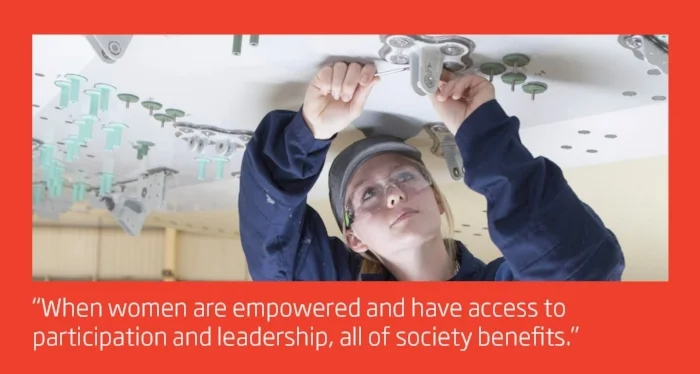
This is one of the reasons why the UN’s fifth Sustainable Development Goal (SDG 5), to achieve gender equality and empower all women and girls, is incredibly important. Full and effective participation of women in both engineering projects as well as in leadership roles - and equal opportunity across the board: political, economic and social - is imperative to an optimally functional and cohesive society. One of the reasons, but not the only one.
Full and effective participation is not only about ensuring societies’ infrastructure is designed in a way that is fit for purpose. Like many teams, the whole becomes more than the sum of the parts. When women are empowered and have access to participation and leadership, all of society benefits, and some of these benefits we should not do without.
The statistics speak for themselves
The International Labour Organisation suggests that women’s work may 'be the single most important factor in reducing poverty in developing economies'.
Christian C. Dezsö and David Gaddis Ross argued in 2011 that firms with females at the senior executive level added $44 million to the company’s value.
The World Economic Forum’s Global Gender Gap Report shows that for many countries, raising women’s workforce participation to the same level as men’s could raise GDP (gross domestic product) per capita by significant amounts – in Egypt for example, by 34%.
The book, Sex and World Peace1, suggests that the 'very best indicator and predictor of a state’s peacefulness is not wealth, military expenditures or religion, but how well its girls and women are treated'. The book goes on to argue, using 148,000 data points over 375 variables for 175 countries, that 'the full and complete development of a country, the welfare of the world and the cause of peace require the maximum participation of women on equal terms with men in all fields'.
So not only does full and effective participation of women in leadership mean better suited and more sustainable infrastructure, which will arguably lead to safer and more inclusive communities, it will also be economically and politically beneficial for countries across the board.
Men and women may have differing ways of engaging with leadership, different leadership styles and may want different types of opportunities. The question is not about how the opportunity looks or presents itself, but that it truly exists in the first place.
At the end of the day, roughly half the population is made up of women, or those who identify as women. Society simply cannot function at its full potential if only half the talent is being utilised. It is incumbent upon us that we allow every possible opportunity for the other half of the talent to participate and to lead. Together, we can work towards a world that looks after us all.
1 - Sex and World Peace, Valerie Hudson, Bonnie Ballif-spanvill, Mary Caprioli and Chad Emmett, 2014
Right of Reply: A Call for Difficult Conversations, Not Censorship
In case you missed it, I wrote a reply in the New York Times to Lionel Shriver's piece, and also to further clarify the points I made in the original Medium/Guardian essay.
To the Editor:
Re “Will the Left Survive Millennials?,” by Lionel Shriver (Op-Ed, Sept. 23):
My initial response to Ms. Shriver’s keynote address at the Brisbane Writers Festival last month — walking out and writing about why — seemed to be largely misunderstood. Many took the reaction to be a call for censorship and responded with fury. They took as a given the right to say and write what they want, without critique, consequence or interrogation of intent.
The debate is not about censorship: People can write in the voices they please. The real question is whether they should. It is about the structures that define the world in which we live and work.
Fiction does not exist in a vacuum: It becomes people’s realities, because so often the only exposure we have to those with very different lived experiences to our own is through stories. But this discussion is larger than the world of fiction.
Ms. Shriver claimed that those who now fight for equality have become the oppressor. Her words betrayed a disappointment that the times are changing, and lamented that people are so terrified of being caught saying the wrong thing that they instead choose not to say anything at all.
This must be the same censorship that sees her books published, her keynote addresses delivered and her Op-Ed article published in The New York Times. Her perspective betrayed a deep fragility, born out of the fear of change. To those with privilege, equality may feel like oppression. But equality need not be a zero-sum game. Framing it so seeks to divide and ultimately to halt progress.
Yes, the times are changing. Millennials, like me, are agitating for us all to be better, and that should come with the acceptance that nobody is beyond reproach. Difficult conversations will make us all uncomfortable. Good. That discomfort is how we improve, how we render the best characters, best stories, how we create the most equitable societies.
So rather than making broad, sweeping generational assessments, how do we move forward? We can start with intent. Is the intent to preserve the status quo, or to demand more?
YASSMIN ABDEL-MAGIED
Melbourne, Australia
Interview with Clare Bowditch
I had a great time chatting with the vibrant and hilarious Clare Bowditch on 774 ABC Melbourne a little while back. Have a listen!
Why We Must Listen to Hanson, Trump and Leave supporters.
So a couple of things have happened in the last few weeks that have caused my Facebook feed to lose its collective mind.
The first was Brexit. The media post the vote (which apparently, no-one took seriously) bordered on openly derisive towards Leave voters.
I love Trevor Noah as much as the next third-culture-kid, but he was just one of the many whose commentary post-vote was essentially, 'how could they do this, don't they know what is good for them?'
Now hold onto that thought, and how the tone might play out.
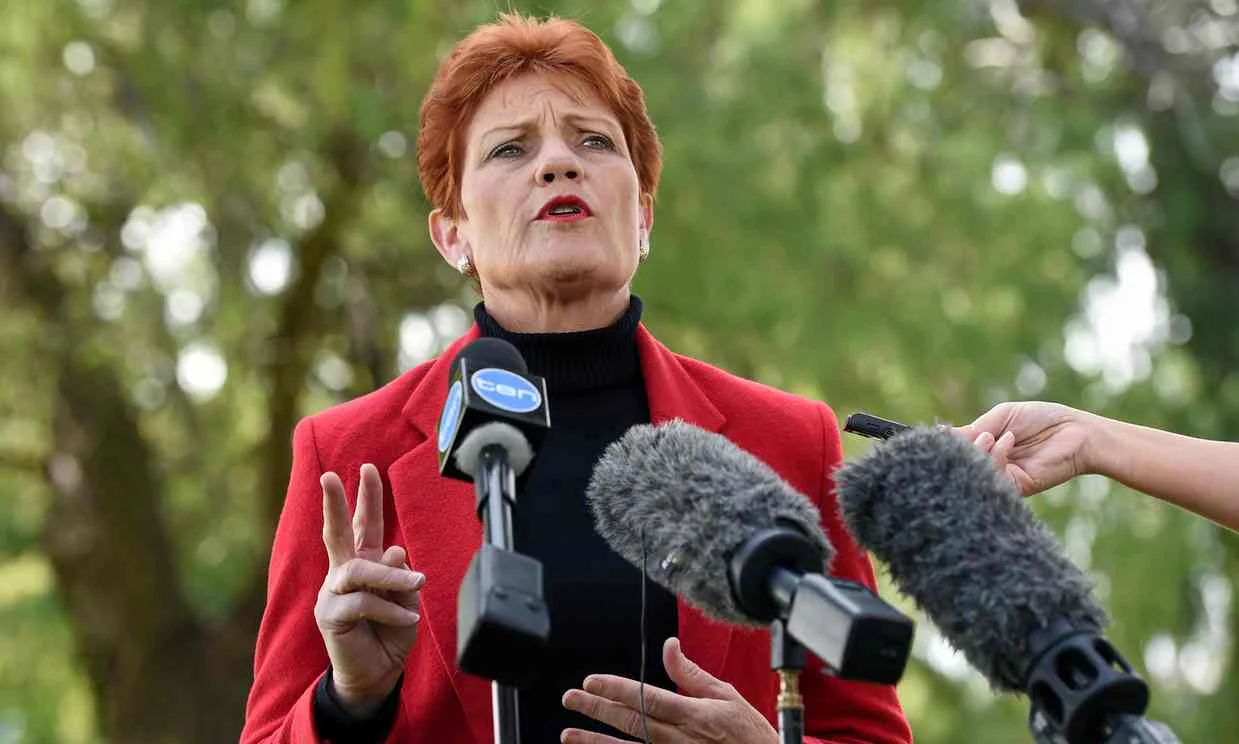
The second thing that happened was Pauline Hanson's election to the Senate. If you haven't heard of Pauline before, here is a taste of her world view.
Again, her supporters have been labelled as xenophobic, ignorant, racist, etc etc.
She's tapping into the populism that has fed the Brexit, and the same that is supporting Trump! On this, the general commentariat is agreed.
Now check out this video... and I want you to listen to what Pauline has to say about 'grass roots Australia'.
“Hold on a minute... Start listening to grass roots Australians! ...I know what the people are thinking and how they’re feeling... Let’s get the kids jobs and pull it together as one!”
Now I don't share the world views or policy platforms of Pauline Hanson, Drumpf or Leave voters in any way, shape or form. However, I think it is incredibly dangerous to ignore and deride those we disagree with. When has derision ever worked to persuade someone to your perspective?
The question then becomes - well, if we are not to deride and ignore, what to do? How do we deal with these vast feelings of frustration, hurt and exasperation?
Honestly, I think what we *must* do is start by truly listening.
Pauline is right on one thing. Leaders haven't been listening to what sections of the population have been trying to say, and so the 'unheard' have taken to yelling in the only way that seems to get the attention of progressives and intellectual elite (a social segment for the purposes of this argument) - by voting in ways that will hurt them - despite what said elite say is 'logical' and 'rational' and 'good'.
Listening doesn't mean agreeing. But what it might help us to do is *understand* why populism is taking on the hold is has, and understand what needs to be done to tackle it.
Who is this group? Well on that I don't have a definitive answer, and smarter people than me are working on nailing down the exact demographics. There are some interesting leads though... Check this graph out.
Note the blue line; inequality within country groups. It is relatively flat (although increasing slightly) during the industrial revolution, but takes a definite dive during the early 20th century. it gets pretty flat again during the period following the second world war... and then it starts rising in recent decades. The world starts seeing an increase in inequality within countries from about the 1970's. Globalisation has been around for a while by this point, but an interesting reflection is the change in the cost of flying.
According to the Atlantic, 'in 1965, no more than 20 percent of Americans had ever flown in an airplane. By 2000, 50 percent of the country...the number of air passengers tripled between the 1970s and 2011.'
So the crudest way of looking at this is that in the last 40 or 50 years, people have started to increasingly look different in countries (because it was just easier to access different places on planes and thus the link to the anti-immigration sentiment), and coincidentally inequality within countries increased, yet everyone was being told that what was happening in the world was good for them.
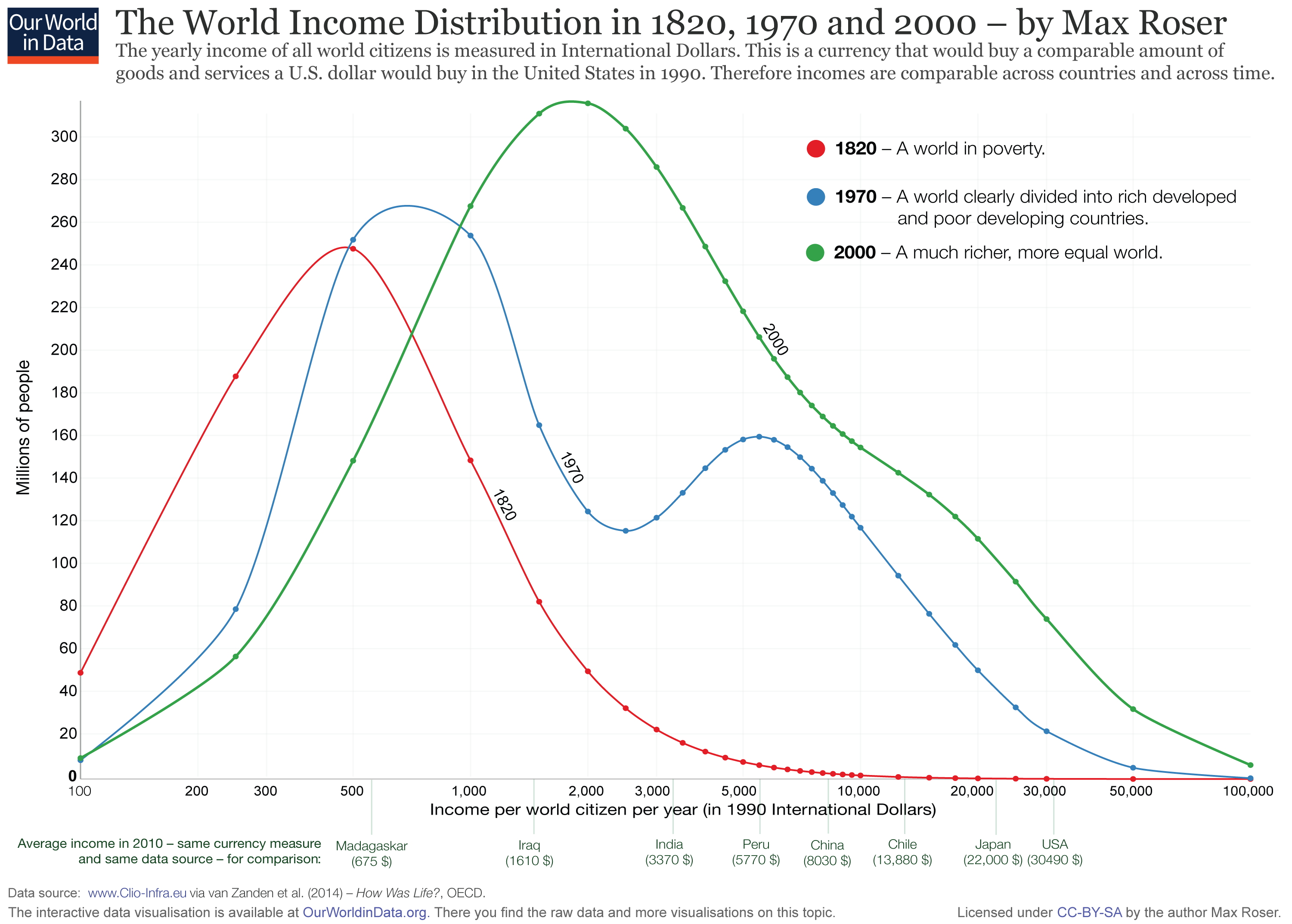
What was happening in the world was good for the world, yes. The graphs above demonstrate that on the whole, the world is less unequal (there are less people at the super poor end of the spectrum).
What hasn't changed though, is the fortune of the poorer people in the richest nations. The people who globalisation (in the modern, airplane driven sense) hasn't really helped. The ones who have lost positions of privilege and power due to the improving status of the world but who have not been swept up with the tide. The ones who in some sense, feel like the world is forgetting them and leaving them behind. The ones who were once proud of their identity and place in the world, and are searching for that feeling once again.
Their vote is equal to everyone else's, and they are some of the people that aren't being heard.
Being unheard - silenced even - is not a fun place for anyone to be.
Inequality is frightening. I truly believe it is one of the most toxic ailments that can afflict a society and so much of what is at the root of the current wave of populism is due to the increasing levels of inequality within nations. Watch the video below (click through) to hear some of the reasons why I think we must keep talking about this deep disease.
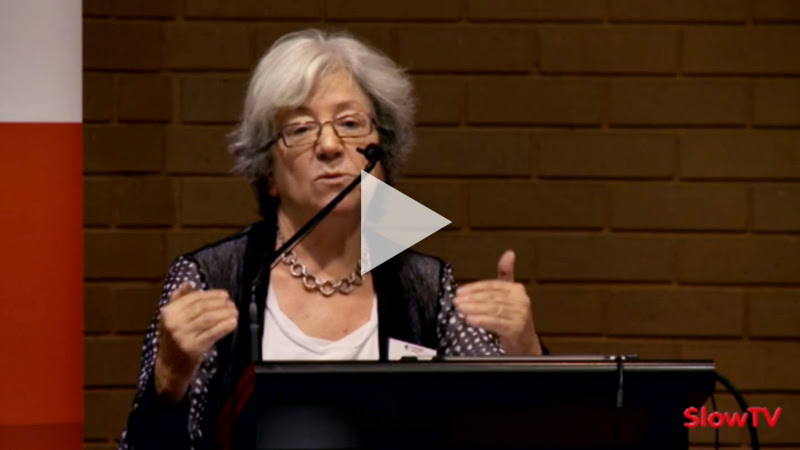
Why inequality is not okay.
So what does this have to do with not laughing at Pauline Hanson's voters?
It's about reminding us to think about the long game. To think about why people are at the stage they are at, and realising that rather than derision, they deserve - like anyone else - to be listened to and heard. That is the minimum we owe. We may disagree, but what is more important is then to tap into that and dig deeper - why are you feeling the pain you are feeling? What in our systems is causing this entrenched and divisive societal ailment? What can we change?
Our societies are meant to be built to protect the lower income ends of society. It is not supposed to exploit them until they have no way of speaking out and thus turn to being societally destructive.
The world is being served some timely reminders. It is also worth noting that the relative peace and harmony we have been working on and have enjoyed for the past few decades has only occurred because people worked at it. Harmony doesn't just happen; social cohesion is a constant project and we all need to roll up our sleeves and get stuck into it, on the daily. A socially cohesive society starts with understanding and respect, and a vision that is about the greater good and systems that reinforce that belief.
We've got some work to do. Khair inshallah...