May Musings - 17
On Power, Change and Balance.
I want to say I was surprised by the result of the Australian election, but I am not. Rather perhaps, I am filled with a disappointment I was hoping not to feel, but am prepared for. It’s a hollow feeling though. I left the nation to live in London over 18 months ago, fed up of a politick and a rhetoric that I seemed unable to influence for the better. How can I feel disappointed when I am not one of the people who campaigned for change, who put up with the hate, who threw their hate in the ring, did everything they felt they could, and yet still find themselves defeated? In the Australian election, I am the critic in Roosevelt’s quote, not the famed ‘man in the arena’. That is my cross to bear.
“It is not the critic who counts; not the man who points out how the strong man stumbles, or where the doer of deeds could have done them better. The credit belongs to the man who is actually in the arena, whose face is marred by dust and sweat and blood; who strives valiantly; who errs, who comes short again and again, because there is no effort without error and shortcoming; but who does actually strive to do the deeds; who knows great enthusiasms, the great devotions; who spends himself in a worthy cause; who at the best knows in the end the triumph of high achievement, and who at the worst, if he fails, at least fails while daring greatly, so that his place shall never be with those cold and timid souls who neither know victory nor defeat.”
Shortly after the results of the Aussie election rolled in, I found myself watching the recent Dick Cheney biopic, Vice. Have y’all seen it? Wow, did it take me back to the heady days of my teens, protesting on the streets against wars in the Middle East that seemed to just keep coming. Guantantamo Bay is still open and yet is so far from the political consciousness one could be forgiven for thinking it was old news. I guess there are newer, hotter, wildfires to put out. It’s one hell of a climate crisis out there.
The biopic reminded me of Cheney’s reprehensible legacy yes, but also made me wonder about the nature of power, and how we - and by we I mean those interested in working towards a fairer world for all - do that. How do we keep picking ourselves up, dusting ourselves off, fighting for fair, despite all that is ahead? How do we continue taking the high road, continue treating those who oppose us with dignity, continue to meet hate with love? It’s not as if anyone is immune to the heady effect of power, either. The hard left - communism - doesn’t have a stellar history, the same way that the hard right - fascism - was responsible for atrocities beyond imagination. Having visited a country in the Caucauses recently, the first place I’ve visited that experienced Soviet Rule, I cannot say with confidence that an extreme version of the left is something worth aiming for. Indeed, no extreme is ever worth aiming for, in my opinion. Indeed, Islam recommends the middle path, always. Surah Baqara says:
وَكَذَٰلِكَ جَعَلْنَاكُمْ أُمَّةً وَسَطًا لِّتَكُونُوا شُهَدَاءَ عَلَى النَّاسِ وَيَكُونَ الرَّسُولُ عَلَيْكُمْ شَهِيدًا
Thus, We have made you a justly balanced community that you will be witnesses over the people and the Messenger will be a witness over you. (2:143)
One version of the tafsir, or interpretation is as follows:
أَنَّ الْوَسَطَ حَقِيقَةٌ فِي الْبُعْدِ عَنِ الطَّرَفَيْنِ وَلَا شَكَّ أَنَّ طَرَفَيِ الْإِفْرَاطِ وَالتَّفْرِيطِ رَدِيئَانِ فَالْمُتَوَسِّطُ فِي الْأَخْلَاقِ يَكُونُ بَعِيدًا عَنِ الطَّرَفَيْنِ فَكَانَ مُعْتَدِلًا فَاضِلًا
The justly balanced (wasat) in reality is the furthest point between two extremes. There is no doubt that the two poles of excess and extravagance are destructive, so to be moderate in character is to be furthest from them, which is to be just and virtuous.
(Note that there are many interpretations, and this is one from this site. I have found the page on moderation useful but cannot vouch for everything else on the site).
I wonder - how does moderation win over extremes? Is it a matter of time? Or simply a question of faith? I’m not sure. Allah knows best, and indeed, that is all I have for now. Khair, inshallah. All I know is that we all gotta get into that arena.

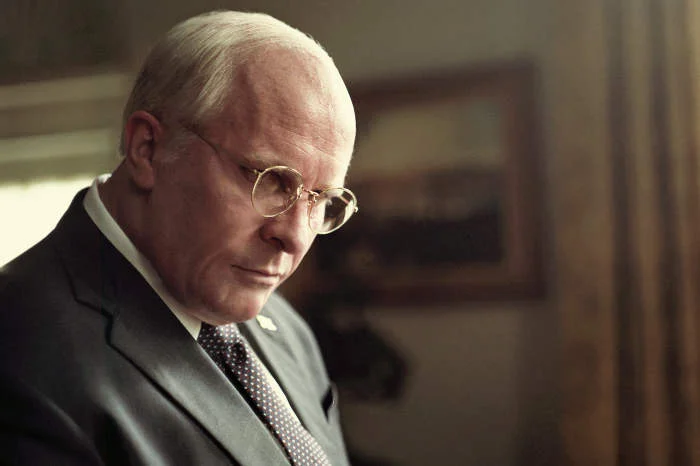
Christian Bale acting as Dick Cheney, in VICE.

The Independent: The uprising in Sudan is about a lot more than bread prices
For many in Sudan, its current situation is virtually unliveable, with cash and fuel shortages galore, astronomical and unpredictable inflation, and basic services that sometimes do more harm than good

Source: AP
It’s been almost 30 years since the largely bloodless coup that brought current Sudanese president, Omar al-Bashir, into power. But however peaceful his ascent, the same cannot be said for his reign, and the current protests that have swept the nation are a testament to this.
It’s 11 days since the start of the protests in the northern Sudanese town of Atbara – Amnesty International reported the death toll during the first five days to be 37. While the unrest and anger show no signs of abating, the historical context is critical to understanding the difficulty in achieving the protestors’ wishes for not only Bashir’s removal, but a change in Sudan’s fortunes.
Sudan’s complex history – tribally, religiously and socially – make it different to many of its Arab and north African counterparts. My family’s story of fortune and diasporic displacement is in part a reflection of these dynamics, but our story is not unique, and can often be drawn back to a name many Sudanese are familiar with: Hassan al-Turabi.
Although Bashir led the military coup that brought him to power in 1989, the real godfather of the current system is Turabi, the head of the National Islamic Front (NIF) at the time. Turabi, the leader of Sudan’s political arm of the Muslim Brotherhood, had a deeply ideological mission to prosecute: the Arabisation and Islamisation of Sudan, at all costs. It was this politicised, frankly, un-Sudanese approach to Islam and the lack of safety and future it portended that, less than two years later, would drive my parents and I out of our homeland.
My parents were city folk: part of the educated and professional class, my father an engineering lecturer with a PhD from London’s Imperial College and a my mother a successful city-based architect, both graduates of the University of Khartoum. They were part of an active and vibrant segment of society: products of a system that for a brief period of time, worked. It was this very segment of society that, once in power, the NIF immediately and systematically targeted and dismantled, understanding the threat that they posed. The middle classes – the doctors, lawyers, accountants and engineers – were critical to the downfall of Sudan’s previous military leader, General Jaafar Numeiri. Turabi and Bashir wouldn’t let that happen again.
Leaders of unions, public service employees, academic staff – anyone who refused to dance to the NIF tune – was fired, threatened, disappeared. The intellectual class was disastrously drained from the nation, leaving an enfeebled public service, health sector and education system.
This brain drain led to the diaspora that I am a part of – young people who grew up outside Sudan to parents who were brought up in a country that is unrecognisable to the one that we see today. Many of us are also the people you’ll find on social media platforms like Instagram and Twitter, amplifying voices on the ground as much as possible, relaying information from our family WhatsApp groups, hashtagging in both our mother tongues. For many of us – for myself at least – this is personal: the current regime has squandered Sudan’s wealth and potential. It is responsible for the deaths of an unknowable number of its citizens and ultimately, destroyed the country we could have grown up safely in, and known as home.
But this story isn’t about the diaspora. This is about the nation that many of us still do call home, no matter how tenuous the physical link. Although the trigger for the current spate of protests were bread prices, the underlying frustration that has fuelled people’s anger is deeper, and much longer in the making. For many in Sudan, its current situation is virtually unliveable, with cash and fuel shortages galore, astronomical and unpredictable inflation, and basic services that sometimes do more harm than good. People don’t chant “we either live free or die like real men” and mean it, unless they’re truly desperate.
But Bashir stepping down would not be the end to the woes of the Sudanese people. The oil revenue money that hasn’t gone into social development has gone into national security, armed forces and weaponry. Bashir’s regime – split from Turabi in the early 2000s – no longer has a particularly Islamist agenda. It seems largely interested in holding on to power alone, and has the firepower to have done so effectively for almost three decades.
The question is therefore, two-fold.
Is it possible to topple Bashir? Possibly. Although the social infrastructure of previous successful popular uprisings, like the unions and professional classes, are no longer as active as in the 1980s, the grassroots movement is still powerful, especially when many feel like there is no where else to turn. Buoyed by the diaspora’s involvement and the freedom of communication through social media, Bashir’s resignation is a definite possibility.
The second and more pertinent question, however, is much more difficult to answer. How do the Sudanese people dismantle the current infrastructure of what is ostensibly a police state, and what will it take to rebuild the nation into one that can enable it to truly realise its potential?
That will take more than one article to answer, unfortunately. But unless given deep and thoughtful consideration from across Sudan’s diverse tribal, social and religious groups, the land of my birth will fall back into the same cycle it has seen since independence. Hopefully we can learn from our mistakes.

Huffington Post: #JusticeForNoura
What do we know about Noura Hussein? The 19-year-old Sudanese woman is currently on death row in Omdurman, Sudan, for killing a man in self-defense. She was convicted of murdering her husband, who raped her on their “honeymoon.”

This was originally published on the Huffington Post.
What do we know about Noura Hussein?
The 19-year-old Sudanese woman is currently on death row in Omdurman, Sudan, for killing a man in self-defense. She was convicted of murdering her husband, who raped her on their “honeymoon.”
When she was 16, Noura’s family attempted to force her to marry a man, despite the fact that Islam prohibits marriage without consent. Refusing the marriage, she ran 155 miles away from her family home to a town called Sennar. She lived with her aunt for three years, determined to complete her high school education and with her eyes on further studies. In 2017, she received word that the wedding plans had been cancelled and that she was safe to return home.
It was a cruel trick. On her return, Noura found the wedding ceremony underway and was given away to the same groom she had rejected three years earlier.
Defiant, Noura refused to consummate the wedding for a number of days. Her husband became increasingly aggressive, and before the week was over, forced himself onto his teenage wife. With the help of his two brothers and a cousin who held her down, her husband raped her.
When he returned the next day to attempt to rape her again, Noura escaped to the kitchen and grabbed a knife. In the altercation that followed, the man sustained fatal knife wounds. Noura went to her family; they disowned her and turned her over to the police. She was held in Omdurman jail until April 29, 2018, when she was found guilty of premeditated murder. On May 10, the man’s family was offered a choice: either accept monetary compensation for the injury caused, or the death penalty. The family chose to sentence Noura to death. Noura’s legal team has until May 25 to submit an appeal.
After the verdict was announced, members of the Sudanese community, at home and abroad, called for mercy. Grassroots activists have been collecting signatures on a petition in an effort to pressure the Sudanese government to intervene. The #JusticeForNoura campaign has collected almost 800,000 signatures and support from the likes of supermodel Naomi Campbell.
Since Noura’s sentence was handed down on May 10, broader international pressure has also mounted. Several U.N. groups, including U.N. Women, UNFPA and the U.N. Office of the Special Adviser on Africa appealed for clemency in the case. The U.N. human rights office said that it has become ‘increasingly concerned for the teen’s safety, that of her lawyer and other supporters’ and argued that imposing the death penalty in Noura’s case despite clear evidence of self-defense would constitute an arbitrary killing. Amnesty International has also gotten involved, collecting letters from people around the world asking for Noura’s release. Over 150,000 letters have reportedly been sent to Sudan’s Ministry of Justice.
“Many have asked if the petitions and noise will make any difference. There is precedence that the international pressure will help.”
Many have asked if the petitions and noise will make any difference. There is precedence that the international pressure will help: In 2014, a Christian Sudanese woman, Meriam Ibrahim, was spared execution after international outrage at the sentence. Stories like this are what keep campaigners going. With intimidation and societal pushback from the Sudanese National Intelligence Security Services (NISS), which banned the lead attorney, Adil Mohamed Al-Imam, from appearing in a press conference, it is incumbent on the global community to highlight these cases and amplify the voices of those calling for justice.
Noura’s story is heartbreaking, but sadly it is not wholly uncommon. What is unusual about her story, as other activists have pointed out, is that Noura fought back. In Sudan, almost one in three women are married before they turn 18, and marital rape is not yet illegal. Noura’s story is one of personal courage and conviction, and an opportunity to shine a spotlight once more on the fight to eradicate child marriage, forced marriage and marital rape.
Among the activists and campaigners working on the #JusticeForNoura campaign, there is hope that the case will change things beyond Noura’s individual situation. The window for those changes can rapidly evaporate, however, if the international spotlight moves on before Noura’s death penalty sentence is lifted.
Noura’s case speaks to the strict gender roles and expectations placed on Sudanese women and reflects the tension between individual courageous acts and a system that is not set up for substantive equality. Despite relatively high levels of representation in parliament, Sudan is one of a handful of countries still not party to the Convention on the Elimination of All Forms of Discrimination against Women (CEDAW). The deeply patriarchal society is also governed by a pluralistic legal system, which uses a protectionist approach toward women in society, rather than the transformative approach advocated by Muslim women’s rights groups like Musawah.
A simplistic reading of the situation might reflect on the horrific nature of Noura’s case and assign blame to Sudanese society, the nation’s socioeconomics or perhaps even Islam. However, the societal conditions and norms that have allowed this sequence of events to occur are not unique, and in fact, even developed nations are not all signatories to CEDAW. Violence against women can be traced to a root cause: gender inequality. Where women are not politically, culturally and economically equal to men, they will be subject to gendered violence, regardless of their faith, race or nationality. Fighting for Noura means fighting for a global society where women and children live free from all forms of violence and have meaningful decision-making power; where they are full participants in society, family and state.
This is not a case of Noura, or women like her, needing to be ”saved” from Islam. This is about supporting the women who are fighting back, using whatever tools they have at their disposal. In the West, discussions about the religion in Muslim-majority countries are wont to decry Islam itself, but that has not been Noura’s wish, nor the wish of any of the activists on the campaign. In fact, Sudanese women ― domestically and in the diaspora ― have taken pains to articulate that forced marriage and sexual assault are prevalent in Sudanese society, but that culturally and based on Islam, these norms need to be shifted.
Noura’s campaign succeeded in raising awareness in part because it has been driven by Sudanese women who understand Sudanese culture. Recognizing that our challenges stem from the same original oppression ― gender inequality ― means that we must not speak on behalf of other women, but amplify and stand in solidarity with those who are already speaking.

GUEST APPEARANCE ON GUILTY FEMINIST PODCAST

I joined Deborah Frances-White and Susan Wokoma for an entertaining and impassioned edition of the fabulous podcast, The Guilty Feminist. Also a guest on the show was the inspiring co-founder of Legally Black UK, Liv Francis-Cornibert.
Check it out!

Riveting Reads: Wednesday 21st March, 2018
Interesting articles on issues ranging from a small town fighting for asylum seekers to stay, to Cambridge Analytica.
Back in the early 20-teens when I blogged a little more regularly, one of the things I most looked forward to was putting together the weekly 'LINKS, LINKS, LINKS' piece. It was a collection of links to articles and books that I had recently come across and found interesting, asking readers to join in on the discussion. These days, I tend to post most things on Facebook or Twitter, but I thought I might try bring my 'Riveting Reads' series back. Let me know if you think it's useful!
A heart warming story: “Bilo” – the little country town that is roaring in defence of asylum seekers
In central Queensland you can easily feel forgotten by and disconnected from the machinations of politicians in Canberra. But over the past week or so, the residents of Biloela have proved that the personal is indeed political. This is a town that looks out for its own.
Food for thought: How Identity Became A Weapon Against The Left
Any statement about what “black people” think or support automatically discounts the perspective of very large numbers of us, because—as is often said but rarely internalized—black people are not a monolith. Identity is, at best, a loose proxy for a person’s political commitments, and individual identity groups contain incredibly diverse perspectives. Failure to recognize that fact can result in dangerous consequences: it can lead us to support policies contrary to the best interests of a community simply because of optics, and it can turn us into a “firewall” to lean on, rather than a constituency to be won.
(YAM's comment) In short: the interest in Hillary as a woman candidate trumped interest in having the best candidate for women.
I'm always talking about this: How Amazon’s Bottomless Appetite Became Corporate America’s Nightmare
The company has grown so large and difficult to comprehend that it’s worth taking stock of why and how it’s left corporate America so thoroughly freaked out. Executives at the biggest U.S. companies mentioned Amazon thousands of times during investor calls last year, according to transcripts—more than President Trump and almost as often as taxes. Other companies become verbs because of their products: to Google or to Xerox. Amazon became a verb because of the damage it can inflict on other companies. To be Amazoned means to have your business crushed because the company got into your industry. And fear of being Amazoned has become such a defining feature of commerce, it’s easy to forget the phenomenon has arisen mostly in about three years.
There's been a lot of chat about data recently: Facebook, Big Data and You (audio) and this is a good explainer about Cambridge Analytica
Late on Friday, Facebook made an unexpected announcement: The data firm Cambridge Analytica, hyped as integral to President Trump’s election, was suspended from the social network for using data collected improperly from Facebook users.
It is a complicated issue that many people might have missed, given the timing of the announcement. With that in mind, here is an overview of the groups involved, what happened — and what it means.
But GDPR is on the case(ish): Europe's New Privacy Law Will Change the Web, and More
On May 25, however, the power balance will shift towards consumers, thanks to a European privacy law that restricts how personal data is collected and handled. The rule, called General Data Protection Regulation or GDPR, focuses on ensuring that users know, understand, and consent to the data collected about them. Under GDPR, pages of fine print won’t suffice. Neither will forcing users to click yes in order to sign up.
If you want to do something about it: Here’s how to check which apps have access to your Facebook account—and delete them
The EU is getting into the ethics in tech space: EC begins AI ethics push
SIGH: Extremism pays. That’s why Silicon Valley isn’t shutting it down
This doesn’t mean that YouTube’s owner (Google) is hell-bent on furthering extremism of all stripes. It isn’t. All it’s interested in is maximising advertising revenues. And underpinning the implicit logic of its recommender algorithms is evidence that people are drawn to content that is more extreme than what they started with – or perhaps to incendiary content in general.
https://www.bloomberg.com/news/articles/2018-03-20/how-facebook-made-its-cambridge-analytica-data-crisis-even-worse?utm_campaign=Revue%20newsletter&utm_medium=Newsletter&utm_source=The%20Interface
Ways you can support Ahed Al-Tamini and other Palestinians.

Source - The National
My lovely friend and activist Sara Saleh has put together this great list of places you can support Ahed Al-Tamini, a young Palestinian child who has, like many others, resisted Israeli occuption and suffered the consequences.
STEP 1: Sign a global petition (bold + italic = click for link)
STEP 2: Consider long-term support of the Boycott, Divestment and Sanctions campaign
For long-term, constructive support and solidarity, please support the global Boycott, Divestment and Sanctions campaign against Israel which works to end international support for Israel's oppression of Palestinians and pressure Israel to comply with international law
STEP 3: Support Volunteer Local Advocacy Groups and their Campaigns
Australia Palestine Advocacy Network (APAN)
STEP 4: Apply Political Pressure by emailing your local Member of Parliament, the Prime Minister and the Foreign Minister:
Email the Prime Minister Malcolm Turnbull
Email Julie Bishop - The Minister for Foreign Affairs
STAY INFORMED
Electronic Intifada: @intifada
Military Court Watch: @MCourtWatch
B’Tselem: Israeli Info Center for Human Rights in Occupied Territories: @btselem
Adalah: Independent human rights organization and legal center: @AdalahEnglish
Amnest International and Amnest Australia: @Amnesty & @AmnestyOz
Why We Must Listen to Hanson, Trump and Leave supporters.
So a couple of things have happened in the last few weeks that have caused my Facebook feed to lose its collective mind.
The first was Brexit. The media post the vote (which apparently, no-one took seriously) bordered on openly derisive towards Leave voters.
I love Trevor Noah as much as the next third-culture-kid, but he was just one of the many whose commentary post-vote was essentially, 'how could they do this, don't they know what is good for them?'
Now hold onto that thought, and how the tone might play out.
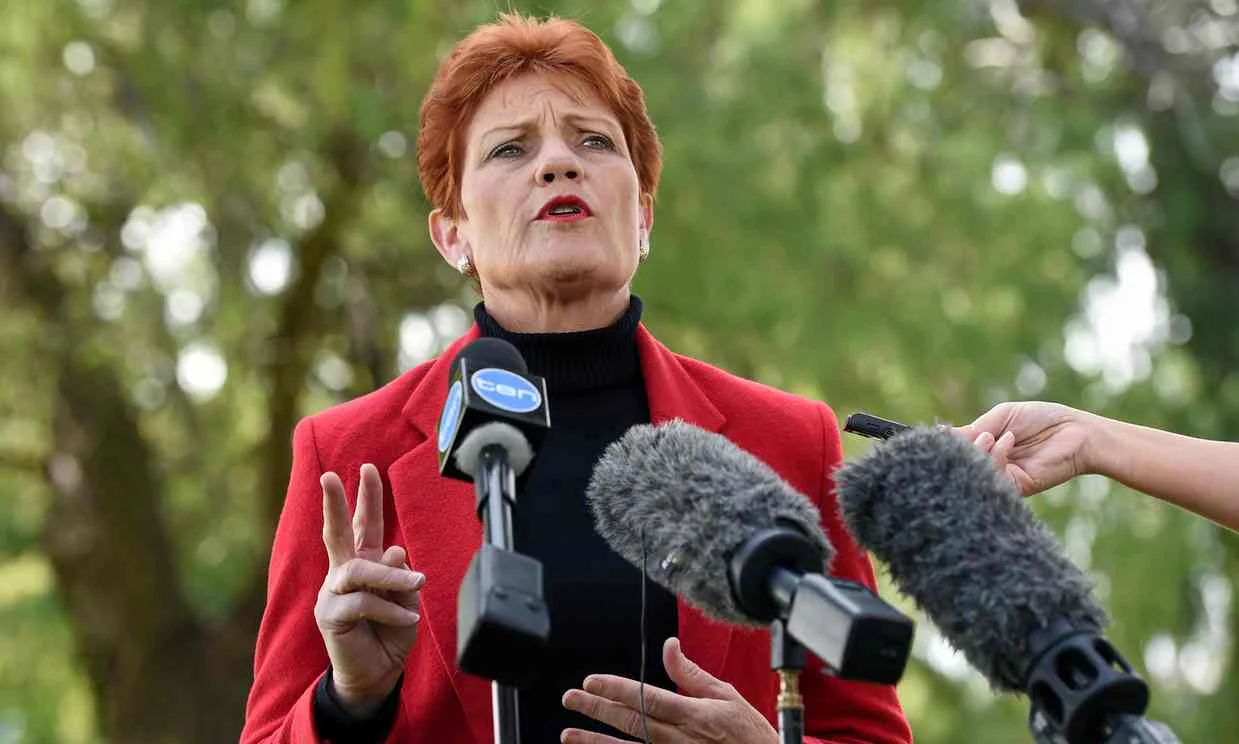
The second thing that happened was Pauline Hanson's election to the Senate. If you haven't heard of Pauline before, here is a taste of her world view.
Again, her supporters have been labelled as xenophobic, ignorant, racist, etc etc.
She's tapping into the populism that has fed the Brexit, and the same that is supporting Trump! On this, the general commentariat is agreed.
Now check out this video... and I want you to listen to what Pauline has to say about 'grass roots Australia'.
“Hold on a minute... Start listening to grass roots Australians! ...I know what the people are thinking and how they’re feeling... Let’s get the kids jobs and pull it together as one!”
Now I don't share the world views or policy platforms of Pauline Hanson, Drumpf or Leave voters in any way, shape or form. However, I think it is incredibly dangerous to ignore and deride those we disagree with. When has derision ever worked to persuade someone to your perspective?
The question then becomes - well, if we are not to deride and ignore, what to do? How do we deal with these vast feelings of frustration, hurt and exasperation?
Honestly, I think what we *must* do is start by truly listening.
Pauline is right on one thing. Leaders haven't been listening to what sections of the population have been trying to say, and so the 'unheard' have taken to yelling in the only way that seems to get the attention of progressives and intellectual elite (a social segment for the purposes of this argument) - by voting in ways that will hurt them - despite what said elite say is 'logical' and 'rational' and 'good'.
Listening doesn't mean agreeing. But what it might help us to do is *understand* why populism is taking on the hold is has, and understand what needs to be done to tackle it.
Who is this group? Well on that I don't have a definitive answer, and smarter people than me are working on nailing down the exact demographics. There are some interesting leads though... Check this graph out.
Note the blue line; inequality within country groups. It is relatively flat (although increasing slightly) during the industrial revolution, but takes a definite dive during the early 20th century. it gets pretty flat again during the period following the second world war... and then it starts rising in recent decades. The world starts seeing an increase in inequality within countries from about the 1970's. Globalisation has been around for a while by this point, but an interesting reflection is the change in the cost of flying.
According to the Atlantic, 'in 1965, no more than 20 percent of Americans had ever flown in an airplane. By 2000, 50 percent of the country...the number of air passengers tripled between the 1970s and 2011.'
So the crudest way of looking at this is that in the last 40 or 50 years, people have started to increasingly look different in countries (because it was just easier to access different places on planes and thus the link to the anti-immigration sentiment), and coincidentally inequality within countries increased, yet everyone was being told that what was happening in the world was good for them.
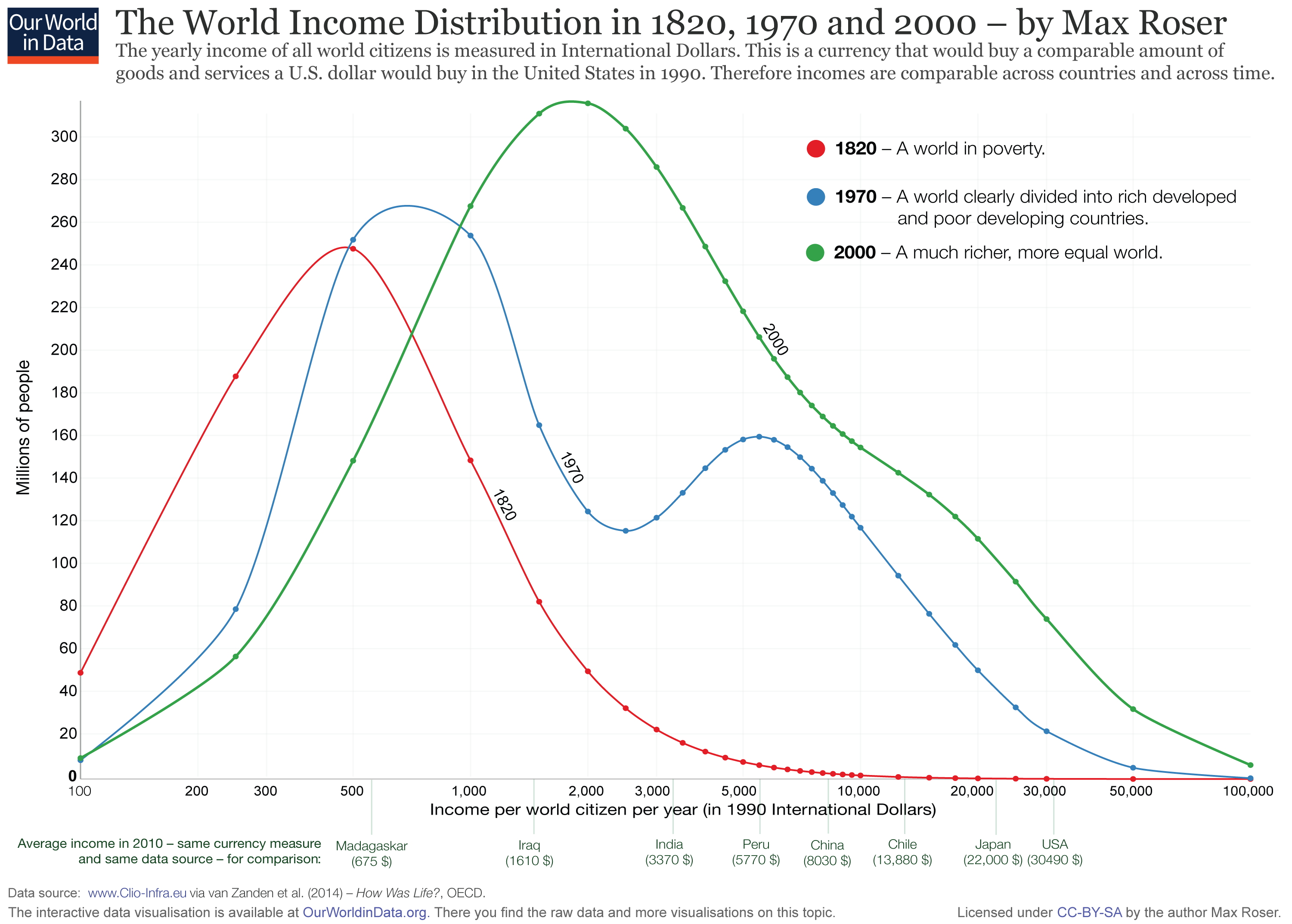
What was happening in the world was good for the world, yes. The graphs above demonstrate that on the whole, the world is less unequal (there are less people at the super poor end of the spectrum).
What hasn't changed though, is the fortune of the poorer people in the richest nations. The people who globalisation (in the modern, airplane driven sense) hasn't really helped. The ones who have lost positions of privilege and power due to the improving status of the world but who have not been swept up with the tide. The ones who in some sense, feel like the world is forgetting them and leaving them behind. The ones who were once proud of their identity and place in the world, and are searching for that feeling once again.
Their vote is equal to everyone else's, and they are some of the people that aren't being heard.
Being unheard - silenced even - is not a fun place for anyone to be.
Inequality is frightening. I truly believe it is one of the most toxic ailments that can afflict a society and so much of what is at the root of the current wave of populism is due to the increasing levels of inequality within nations. Watch the video below (click through) to hear some of the reasons why I think we must keep talking about this deep disease.
Why inequality is not okay.
So what does this have to do with not laughing at Pauline Hanson's voters?
It's about reminding us to think about the long game. To think about why people are at the stage they are at, and realising that rather than derision, they deserve - like anyone else - to be listened to and heard. That is the minimum we owe. We may disagree, but what is more important is then to tap into that and dig deeper - why are you feeling the pain you are feeling? What in our systems is causing this entrenched and divisive societal ailment? What can we change?
Our societies are meant to be built to protect the lower income ends of society. It is not supposed to exploit them until they have no way of speaking out and thus turn to being societally destructive.
The world is being served some timely reminders. It is also worth noting that the relative peace and harmony we have been working on and have enjoyed for the past few decades has only occurred because people worked at it. Harmony doesn't just happen; social cohesion is a constant project and we all need to roll up our sleeves and get stuck into it, on the daily. A socially cohesive society starts with understanding and respect, and a vision that is about the greater good and systems that reinforce that belief.
We've got some work to do. Khair inshallah...
It's been a while...
Hey y'all!
A few things have been going on so I thought I'd share a few links, thoughts and announcements...
1. I wrote this piece after attending an Iftar with the Prime Minister of Australia, the first Iftar held by a sitting PM in the history of the nation. It was also in response to some pretty vicious reporting following the event... check it out here!
The fallout has been pretty rough, and has definitely provided lots of food for thought. I'm still ruminating but hope to share some reflections soon. Stay tuned inshallah.
2. I had the pleasure of being interviewed by the lovely Meri Fatin for Cover to Cover WA talking about 'Yassmin's Story' and the process of writing a book. It was broadcast on Westlink TV a little over a week ago. Check out the video below!
3. I started a new Instagram! It's very self indulgent...
*chuckles*
@HijabKween is where I'm sharing my hijab/turban styles, fashion influences and bits and pieces of inspiration that I collect on my travels. Hit a sista up!

4. Junkee let me reminisce about the last year. Subhanallah, it has been a full year, Alhamdulilah! Check it out here...but more importantly - if you'd like a nomination for Junket let me know - and nominate someone you think is cool for Aus or Young Aussie of the year! It's how we recognise those changemakers around us! <3
5. Amaliah are doing this really awesome thing where their readers 'takeover' their Snapchat for a day and show what Ramadan looks like in their world! Follow the account below...I'll be doing a Ramadan Takeover on the 29th of June inshallah! Watch out for it!

SNAPCHAT YO.
6. Still haven't picked up your copy of 'Yassmin's Story'? Well, fortunately for you, Mammia Mia posted an excerpt (a particularly angry one, haha!) here. Check it out...then BUY THE BOOK! *grin* *angel face* #MyHijabCoversMyHaloRight? :D
7. I'll be cruising around Switzerland, The Netherlands, Berlin and Uganda over the next month inshallah. Follow my travels on @yassmin_a (twitter, snapchat and insta), but if you're in these areas and you'd like to catch up and say hello, holla @ me! Email yas@yassminam.com - I'd love to meet you inshallah, and bonus points if you have a copy of the book for me to sign ;)
8. Last note... this is what I wrote on my FB wall today. Food for thought.
Fear must not divide us.
I haven't written for a while as I have been run off my feet with a few projects - keep up to date via my FB here.
However, the attacks in Paris have given me cause to write a quick note.
We cannot let fear divide us.
Whatever your foreign policy agenda, no matter how badly the immigration officers may treat you, or how uncomfortable life becomes on public transport, let us not turn that into hatred. Because then, who wins?
I am just about to jump on a plane to the U.S. where I imagine borders will be tight. This is what I will be reminding myself of.
There is no 'us' versus 'them', we cannot afford to think that way. Life is not that easy and straightforward. In some cases though, there is clearly and 'wrong' and a 'right', and there is no 'right' that includes killing of the innocent.
Islam does not allow for killing innocents. Ever. Full stop.
Our Prophet Mohammed (SAW) did not turn to violence unless it was in self defence and even *then*, he constantly chose to forgive rather than inflict further pain.
Even the colonisers, when invading Muslim countries back in the day, thought Muslims were 'too lenient'. Governor Hastings, along with his Governor-General of India Charles Cornwallis, felt like Islamic law allowed people to escape punishment too easily, complaining that Sharia was “founded on the most lenient principles and on an abhorrence of bloodshed”.
Why bring that up? To remind us that we do not have to be steeped in blood to be strong.
The world we live in can sometimes feel like it is more unstable, more violent and that the violence is becoming more indiscriminate. We cannot let that feeling override us, because that is what causes further division and allows the space for vitriol and hatred to occur. Acts of prejudice are at the bottom of the Pyramid of Hate, and we cannot afford for our society to make it's way back up that ladder.

We have to find it within ourselves to be kind. We have to find it within ourselves to forgive those who may look at others with fear and see it as an opportunity to build bonds of compassion, to find what unites us rather than what divides. We owe it to our ancestors and to society to ensure we play a part in making the world a safer place and not sit in the ease and comfort of hate.
If we all try to find a way to unite, particularly in a way which is inclusive, in the words of Kendrick:
"We gon be alright!" (inshallah)
#ParisAttacks
Take this moment to also remember those in other nations who suffer from being in the wrong place at the wrong time. Khair inshallah. #Lebanon #Syria #Beirut #Sudan #Iraq #DRC
We must not lose faith in humanity.
It goes without saying, but should be said anyway.
The various violent events that have dominated our media over the last few days, weeks and months have been heart wrenching atrocities. Lives have senselessly been lost, bringing the precarious nature of our comfortable lives into sharp relief. It is almost exhausting in its relentlessness, and bizarre to step back and realise that we live in a world where violence has taken on a gross normalcy; terrible, yet no longer completely out of the ordinary.
After the Sydney Siege, there was little I felt I could add to the public lament.
Yet after Sydney, 2014 didn't let up. It was followed by the slaughter of innocent children in Peshawar, the grinding, endless deaths in Congo, the murders in Paris and an unimaginable massacre in Nigeria, only a few days ago.
The easy option in dealing with this barrage, this constant reminder of the cruelty of humans, is to switch off.
Stop reading the commentary.
Stop engaging in the debate.
Stop critically analysing and regress to black and white, to binary thinking, to 'us' and 'them', 'them' being whoever you deem as broadly evil or uncivilised, depending on your colour and place of birth.
That cannot be our response.
Yes, in the midst of the mourning, there has been a troublesome vein of hatred that has bubbled beneath the surface. Glints of these perspectives and attitudes are epitomised in the language and expectations surrounding the media and commentary around the violence.
Listening to my favourite news podcasts for example, or even to our own Tony Abbott, there was a constant reminded that 'they hated 'our' freedoms', our 'civilisation', our 'liberty'.
Who are 'they'?
'We' have to stand against the extremists, people say. We can't let 'them' win...
The problem being that entire groups are demonised, dangerously so. The framing makes someone like me - thoroughly, visibly Muslim and fervently Aussie because well, this is home - almost ask myself the question: am I us, or them?
Of course I know...right? Yet, there is a constant implied expectation for justification. The is a whisper of accusation in all the tones, forming seeds of doubt fertilised by ignorance and lack of exposure to anything but the dominant discourse...
The nuances are oh-so-subtle.
The language polarises, forces us to choose sides without realising what we are doing. It frames our conversations in ways that moulds our thinking: classical grade 10 critical literacy stuff. Obvious to those paying attention, but how many of us truly are?

It has been explained very well by writers more impressive than I, and there are links below to some very interesting and thought provoking reading around how the media reporting is clearly biased, how blaming all Muslims isn't going to help as expecting constant apologies is damaging in itself and how providing context is not the same as justifying an action. In ruminating on our collective (i.e. humanity's) current situation, the following became clear:
ONE.
The language we use to refer to those who commit violent acts must change. 'Islamists', 'radicals', 'fundamentalists', 'extremists' and the like simply suggest that well, these actions are at the fundamental core of what it is to be Muslim. It legitimises their actions as Islamic, when scholars worldwide have time and time again, said that they are not.
Rather, they should be referred to as what they are: Violent criminals.
We don't often refer to criminals by their perceived or claimed motivation: A bank robber is a bank robber, not a greedy-capitalist. A murder is a murder, not a politically-motivated-youth-claiming-Islam-backs-him.
TWO.
If we turn on each other, we are playing into the hands of these violent criminals.
Juan Cole puts it brilliantly:
"Al-Qaeda wants to mentally colonize French Muslims [and this can apply to all nationalities], but faces a wall of disinterest. But if it can get non-Muslim French to be beastly to ethnic Muslims on the grounds that they are Muslims, it can start creating a common political identity around grievance against discrimination."
Acts of violence that are so obvious and politically motivated are aimed at sharpening contradictions. They are aimed at forcing open those slivers of cracks in our multicultural societies. They feed on distrust in communities, spreading insidious doubts and roots that breach the foundations of compassion a society has built.
We have to choose to see beyond the hatred and have faith in humanity, regardless of what we are being drip fed to believe by the hype around us.
Oh, it's not going to be easy, and it doesn't mean blind positivity. It means belief that humanity can prevail. 'Humanity' isn't owned by a civilisation either; it isn't 'secular' or 'traditional', it lies in understanding that each of us are fundamentally human, and we all deserve protection, compassion, opportunity, love.
It means understanding grief and mourning, and not choosing to mourn one life as more important than another. It means respecting that every life is valuable and its barbaric and unfair extinguishing is inhumane, regardless of the motivation.
It means choosing to treat each and every person individually, not judging them by the actions of others.
It means, as Imam Zaid Khair puts it, not being hasty in dismissing others, but being patient in inviting them to understand your lense.
We have to work together to constantly, tirelessly and consciously choose to value our common humanity.
If we choose to hate, to despair, to lament, to be so overwhelmed by the seeming tidal wave of conflict, nothing will change.
But if we stay resolute in the belief that humanity will prevail and that each and every single of us has a part to play in making this happen, then surely, we can have something to look forward to.
***
5 pieces of food for thought:
If nothing else, read this: 9 Points to Ponder on the Paris Shooting and Charlie Hebdo. Much of my writing was inspired by this piece.
"And even when we rightly condemn criminals who claim to act in the name of Islam, little of our grief is extended to the numerous Muslim victims of their attacks, whether in Yemen or Nigeria—in both of which there were deadly massacres this week—or in Saudi Arabia, where, among many violations of human rights, the punishment for journalists who “insult Islam” is flogging. We may not be able to attend to each outrage in every corner of the world, but we should at least pause to consider how it is that mainstream opinion so quickly decides that certain violent deaths are more meaningful, and more worthy of commemoration, than others."
"Al-Qaeda wants to mentally colonize French Muslims, but faces a wall of disinterest. But if it can get non-Muslim French to be beastly to ethnic Muslims on the grounds that they are Muslims, it can start creating a common political identity around grievance against discrimination."
Mourning the Parisian Journalists Yet Noticing the Hypocrisy
"But then again, I had to wonder about the way the massacre in Paris is being depicted and framed by the Western media as a horrendous threat to Western civilization, freedom of speech and freedom of the press, I wondered about the over-heated nature of this description. It didn't take me long to understand how problematic that framing really is."
So don't be surprised if people around the world, while condemning the despicable acts of the murderers in Paris and grieving for their families and friends, remain a bit cynical about the media-circus surrounding this particular outrage while the Western media quickly forgets the equally despicable acts of systematic murder and torture that Western countries have been involved in. Or perhaps a bit less convinced that Western societies are really the best hope for civilization when they condone this kind of hypocrisy, rather than responding equally forcefully to all such actions repressing free speech or freedom of assembly. I could easily imagine (and regret) how some Islamist fundamentalists will already be making these points about the ethical inconsistencies of Western societies with their pomposity about human rights that never seem to constrain the self-described "enlightened democracies" from violating those rights when it is they who perceive themselves as under attack."
Charlie Hebdo: Understanding is the least we owe the dead
"Take your pick, whichever one suits your politics, whatever tin drum you want to bang on.
Just don’t bang it near me. I don’t want to read about how “we’re all” anything, because wishing away complexity is inadequate and juvenile. I want to hear no talk about cracking down on anyone or tightening anything up. We have cracked and tightened for a decade and a half and all we have to show for it is a bloated, unaccountable security state that is eroding the cherished freedoms we claim to be so eager to protect."

That Speech: Obama in the House!

“How much time did you get with him?”
The message was insistent.
“Oh I duno, maybe 10 seconds? Five?"
“Take me through every single second…"
I grinned, cast my mind back to the brief moment of the handshake and let my thumbs fly...
The News
...the coolest kid/leader in town - President Barack Obama - was coming to visit my alma mater was everywhere. Fan girls and boys extolled their excitement with exclamation marks and witty status updates, an exuberance tempered only by the ire of the UQ (University of Queensland) students who realised that ‘day kids’ (students who didn’t stay at college) wouldn’t get a chance to attend. Understandably, it was an unpopular decision, to say the least. The news that only 40 or so students from every residential college was able to secure one of the sought after tickets rubbed a lot of people up the wrong way.
I have it on good authority that it was the University’s decision, and may have been due to the fact that they had to get RSVPs and confirmations with only a few days notice. The US Consulate/White House (as far as I have been led to believe) was keen to get as wide a demographic as possible but left it in the hands of the Universities and schools. Make of that what you will...
I was fortunate to snare a spot in the crowd, thank you US Consulate! Awkwardly though, I didn’t realise the tickets had to be picked up a couple of days before the event (at UQ!) until I was called up by the staff on the collection day! Sitting in my office in Perth, I scrambled to get a family member to pick up the invite for me. Predictably, no-one in my family picked up the phone! A friend came to my rescue and operation “Ticket Collection” was a success. (Shout out to my saviour Romy!)
I arrived in Brisbane on the morning of the event, rushing home from the airport with my little brother at the wheel and hurriedly deciding what to wear. It had to be comfortable, I thought, in order to be able to handle the incredibly sticky Brisbane heat. Not too crazy I told myself, but also with just enough ‘Yassmin-ness’ (read: flamboyance) to be appropriate. Smart Casual, the invite said, but since when did anyone pay attention to what the invite says? I went high waisted pants (*cough* cue *cough) and killer high heels (modest, of course!), so that I wasn’t just tall but towering. Ha, nothing like height to demand presence right?
Securing the Seat
Doors opened at 10.45am: I strolled in and secured a spot three rows from the front. I hadn't realised the President wasn't arriving for hours, so couldn't understand why the place wasn't immediately full. As I looked quizzically around the center, the guy next to me explained:
"Well, this is what happens when you rock up two hours early..."
Ah, indeed. Fortunately though, there was plenty of entertainment.
Politics of the young people in the crowd aside, the invite list was fascinating. Once the room began to fill up, there were a few hundred students in the risers complemented by hundreds of the men and women who help shape Australia. In the far right hand corner of the room sat the ‘heavy hitters’, and boy were there a few! Ex-Governor Generals, Premiers, former Premiers, business men and women and stalwarts of the Australian political scene. Wayne Swan, Qunnie Bryce, John Story, Sam Walsh, Bronwyn Bishop, Colin Barnett, Campbell Newman and Tanya Plibersek to name a few. It was daunting, but honestly? An awesome opportunity to make some new friends, I thought. The worst part was not recognising someone I really should have, particularly when they clearly think you know how important they are (sorry Colin Barnett). Something I am working on…
Funnily enough, one such 'High Net Worth Individual' commented on the number of heavy hitters in the room.
“The thing is,” he said. “I am not sure they are used to being made to wait!" …and yes, waiting is what they were doing.
Doors opened at 10.45am, but the President didn’t make his entrance until after 1pm. That is a lot of time for someone who deems their time critically important, but alas, if not for Obama, then who for?
The Vice Chancellor of UQ stood up to make a speech.
"This is a once in a lifetime opportunity... but I'm going to get off this stage because I know no-one is interested in what I have to say! I'm like the warm up act for the Rolling Stones!"
People chuckled, but it was true. There was a buzz in the air. Everyone was excited to be there, and even the loftiest figures a little bit groupie-like. The background music would occasionally fade out between songs, and every time there was a moment of silence, the room would instantly hush in anticipation. This is the moment, we were all be thinking, and then a note of the next song would ring out and the building erupt in (slightly nervous) laughter. The tension was palpable...
Then, the moment we had all been waiting for.
The announcement of #Obama # universityofqueensland A video posted by Yassmin Abdel-Magied (@yassmin_a) on
The Big O
I am not a massive fan of Obama's policies, and anyone who has had a discussion with me knows my opinions on his legacy. That being said, there is no denying his power as an orator. He came out and instantly the masses swooned, laughing uproariously at his aussie jokes and comments about "Fawr X".
His charisma is undeniable, and he used it to good effect: starting out bolstering the Aussie pride and subtly reinforcing our status as allies.
"As the world's only super power..." he would say, a silent barb towards China.
"These are our choices, oppression or liberty."
The real clincher however, came after he mentioned Indonesia, Japan, South Korea and the Philippines. The real surprise was what dominated the headlines; Obama's commitment to an International Climate Fund, aiding developing countries tackle the effects of climate change.
This is a fascinating development, particularly as I am personally interested in the effects of energy poverty and the dilemma around setting up countries to gain equal access to clean, cheap and sustainable energy. More on this at a later date...
The Handshake
It happened like this:
https://www.youtube.com/watch?v=nopWOC4SRm4
(All jokes aside...)
Speech was made, and he moved to the side of the stage. We had no idea if he was going to meet anyone, but the moment he started descending via the stairs, the crowds surged towards the barricade. There must have been ten secret service / body guard guys on each side, warning people not to shove cameras in his face as he walked along the black fence and greeted individuals.
I was aided by my enormous heels and wide hips. As I swung my way to the front, a former colleague from the Queensland Museum smiled at me.
"Get in there Yas!"
I grinned back. Oh yes indeed!
As the President turned towards me, my mind raced. What do I say? This wasn't the time for a foreign policy barb I supposed...
The handshake was firm, and his eyes fixed on my face, seemingly like an uncle I hadn't seen in a while.
"Thank you sir" was all I managed.
"How are you," he said (I think. It is a bit of a blur). He looked right at me (slightly up, I was really tall), perhaps slightly surprised to see someone who looked like me in the Australian crowd.
"Good, thanks..."
The lack of inspiration in my answers is slightly embarrassing in hindsight, as was the fact that I didn't go for the fist bump instead.
The aftermath
Lots of squealing. From everyone involved...
Defence Australia wants to know what we think. Help me tell them.
 Ladies and Gents, occasionally we have to use the tools the system has given us to agitate some change. That time may be now...
Defence Australia is calling for submissions from the community to inform the Defence White Paper, which will guide Australia's Defence spending for the next 20 years.
They want the community to send in thoughts - and if you have ever wished you could change the way Defence spends their money or thinks about things, this is the opportunity you have been looking for.
It is so important for marginalised and minority voices to be heard in this sort of forum. I'd like to make sure, in whatever way I can, that these voices are heard.
Therefore, if you want to write a submission (or a short paragraph showing your feelings!), check out the links below:
WHITE PAPER (What on earth a 'white paper' is...)
COMMUNITY CONSULTATION (Some info about the consultation process)
PUBLIC SUBMISSIONS (Where you make a submission)
2014 PAPER (What the 2014 paper said).
If you don't want to write your own submission but want your voice heard, email me: yassmin@youthwithoutborders.com.au and tell me what you think, or we can have a chat in some other way.
Make sure your voice gets heard.