May Musings - 12
Today’s been a day of transit, which has meant many a podcast was listened to, and I almost finished knitting scarf #2!

I was ready to share a slew of thoughts with y’all about democracy (inspired by this podcast episode reviewing a film called ‘What is Democracy?’) however, I’ve just heard the news of violence kicking off again in Khartoum, Sudan, and I can’t quite concentrate.
There have been reports of shots fired, people beaten, harassed and martyred. Ina Lilahi wa Ina Ilayhi Rajiun. I haven’t verified these reports personally, and there is still speculation around who is responsible, but the escalation of violence is a reminder of the nation’s instability. The stalling of negotiations, electricity cuts and water shortages and the influence by foreign interests (UAE, Saudi, the like) all contribute to the pressure cooker and make the Sudanese Uprising Project all the more fragile. Khair inshallah. I hope everyone is safe, and I’m going to get onto WhatsApp right now to check just that, inshallah.
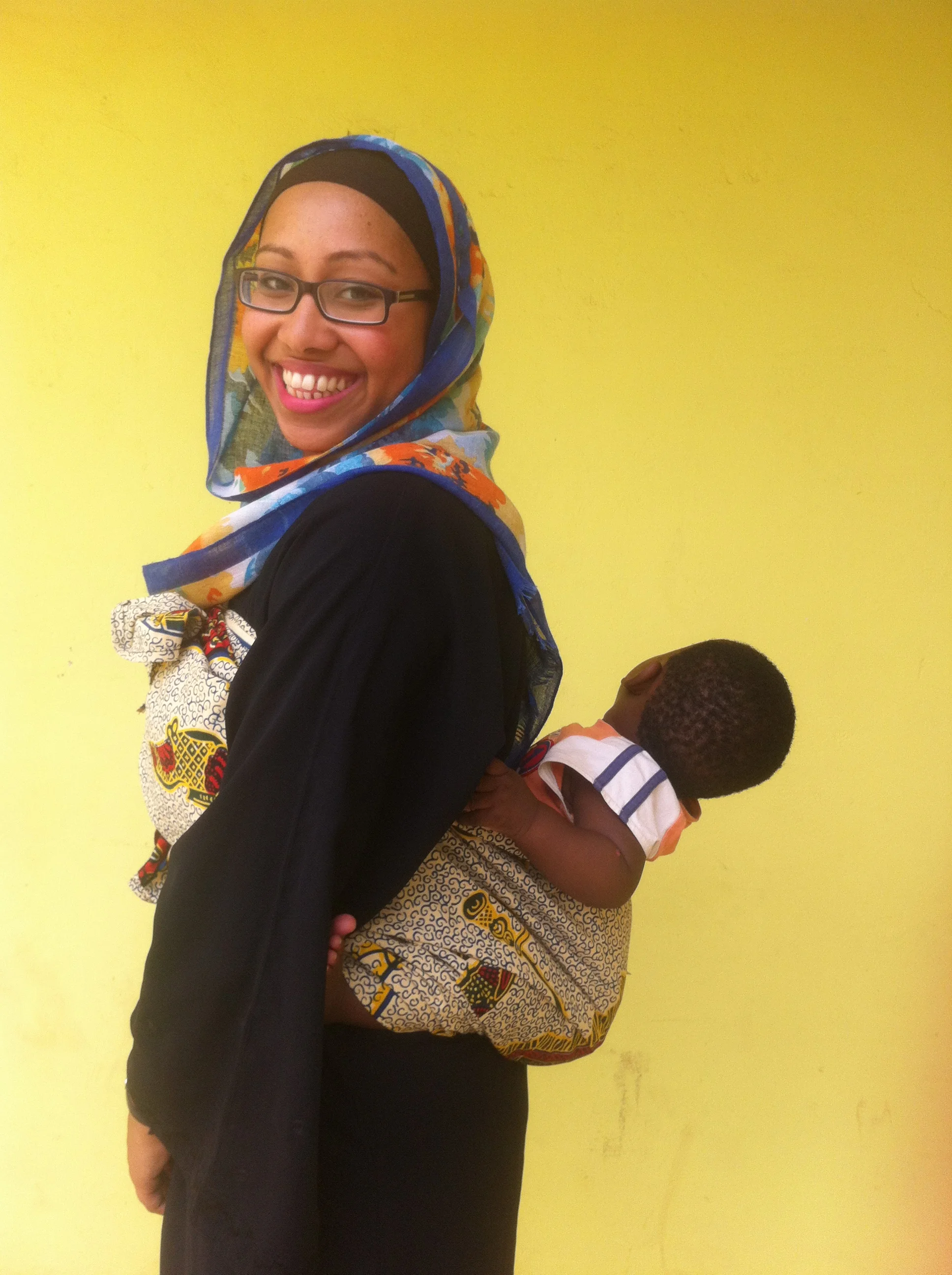
May Musings - 06
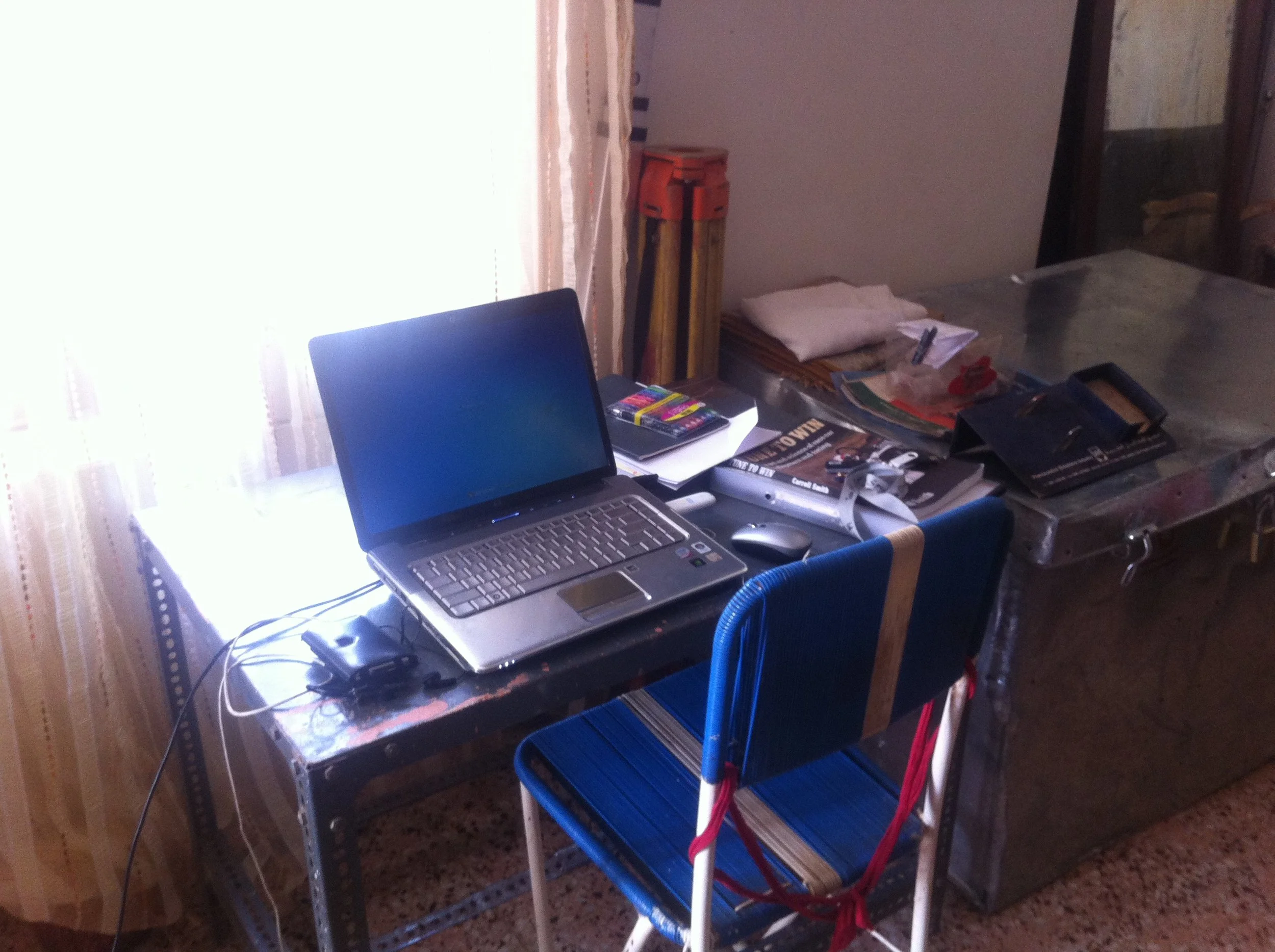
Where I did my blogging and studying while living in Sudan, circa 2012.
How much is enough? When it comes to the big things in life: war, climate change, gentrification, the rise of fascism… how do you know when what you’ve fulfilled your obligation, looked after ‘your bit’, or done enough?
I’m going to write about something a little close to home today.
For those who may or may not know, Sudan is going through a process of major political upheaval right now. I was on the ground in Sudan, when protests first started kicking off in mid 2012 - that’s why I started this blog actually, to talk about what was happening and try get international attention. My blog ended up being frozen for some time, and folk who were writing online started getting raided and beaten, and so my family asked me to stop. I did - and I went back to Australia, to my professional life and to a diasporic existence that’s a little more complicated than turning up to the protests.
Come December 2018, and I hear about the people taking to the streets in Atbara. Things are kicking off. I am meant to be in the country, and my family asks me to refrain from travelling as the government is collecting anyone with a voice, anyone ‘making trouble’. My family isn’t politically connected per se, they wouldn’t be able to get me out easily of a nasty situation - and so I stay here in London, safe (Alhamdulilah), but wracked with guilt. Is writing an article or two enough? Is posting on social media enough? How much posting on social media is sufficient? Is raising money for the people who are in the sit-in enough? How much money is ‘enough’? If you have a platform (as I do, Alhamdulilah) what is your responsibility, and where does it end? Are you allowed to take a break? Is that cheating, lacking integrity, not good enough?
I don’t know the answers to these questions. I try to do what I can, in fits and starts, but never feel like it is enough. I wonder whether, on the few days where I haven’t checked the news on the uprisings, whether that is ‘self care’, or me choosing my privilege over my people. I wonder if it would be morally easier if I just put myself in the line of fire - metaphorically or physically - at least then, I know I have given everything I had…
***
Often, when grappling with challenges like this, I turn to faith. But I have yet to find an answer that soothes the guilt. Maybe in time, inshallah. But until then, yallah. How do you navigate this space? I have no answers yet, only a yearning… a yearning that I agree and appreciate self centers my moral struggle amongst a much more urgent conversation about a country’s political future! Ah - I guess that’s what a personal blog is for, right?
***
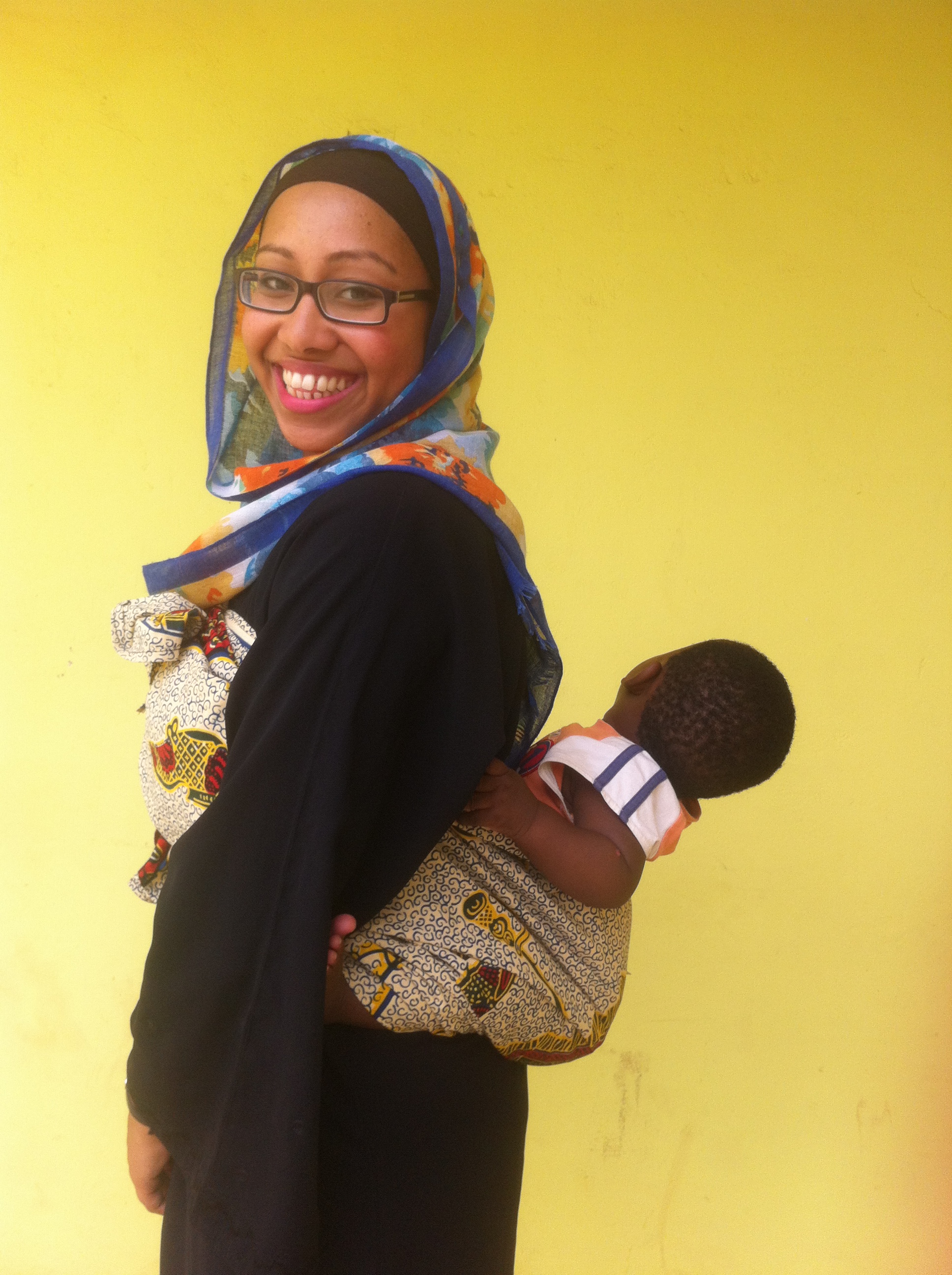
…that time I borrowed a baby.
May Musings - 03
Oh, I really am just scraping in writing this at 10.45pm. Gotta stick to that daily commitment though!
***
Big day of themes today, folks. Binged watched Top Boy on my trip back from Malaysia to London, then ended up at a protest in the British Museum against stolen artifacts (I found my brethren, folks who love those anti-colonial jokes!) and wrapped it all up with a #SudanUprising solidarity fundraising event at Rumi’s Cave…
A lot to think about and process. Forgive me, as my thoughts are still scattered around the city…
***
A day like today makes me appreciate the diversity that London has to offer, and recognise the privilege I have to walk between various worlds within the city. Top Boy, a show I highly recommend, reminded me that privilege of identity fluidity - born of my parents’ choices and Allah’s blessings - was something not easily accessible by all. My brief and sardonic reunion with the British Museum reminded me of the institutional injustices that continue to rage around us, seemingly impenetrable to intervention by mere mortals. But the Sudanese event at the end of the day was a reminder that all institutions are fallible, and almost all empires fall. It also reminded me, as events like these so often do, that we are never as alone as we think we are. Whether that be one’s confusion as a member of the diaspora, struggling to chant in your mother tongue, whether it’s the isolation of depression and the battle in your own head or whether it is simply wondering what space you’re allowed to take up in a room or city… giving voice to that confusion and isolation has an almost chemically transformative effect. Suddenly, it’s not your burden alone. It is never your burden alone.
It is never your burden alone.


The Independent: The uprising in Sudan is about a lot more than bread prices
For many in Sudan, its current situation is virtually unliveable, with cash and fuel shortages galore, astronomical and unpredictable inflation, and basic services that sometimes do more harm than good

Source: AP
It’s been almost 30 years since the largely bloodless coup that brought current Sudanese president, Omar al-Bashir, into power. But however peaceful his ascent, the same cannot be said for his reign, and the current protests that have swept the nation are a testament to this.
It’s 11 days since the start of the protests in the northern Sudanese town of Atbara – Amnesty International reported the death toll during the first five days to be 37. While the unrest and anger show no signs of abating, the historical context is critical to understanding the difficulty in achieving the protestors’ wishes for not only Bashir’s removal, but a change in Sudan’s fortunes.
Sudan’s complex history – tribally, religiously and socially – make it different to many of its Arab and north African counterparts. My family’s story of fortune and diasporic displacement is in part a reflection of these dynamics, but our story is not unique, and can often be drawn back to a name many Sudanese are familiar with: Hassan al-Turabi.
Although Bashir led the military coup that brought him to power in 1989, the real godfather of the current system is Turabi, the head of the National Islamic Front (NIF) at the time. Turabi, the leader of Sudan’s political arm of the Muslim Brotherhood, had a deeply ideological mission to prosecute: the Arabisation and Islamisation of Sudan, at all costs. It was this politicised, frankly, un-Sudanese approach to Islam and the lack of safety and future it portended that, less than two years later, would drive my parents and I out of our homeland.
My parents were city folk: part of the educated and professional class, my father an engineering lecturer with a PhD from London’s Imperial College and a my mother a successful city-based architect, both graduates of the University of Khartoum. They were part of an active and vibrant segment of society: products of a system that for a brief period of time, worked. It was this very segment of society that, once in power, the NIF immediately and systematically targeted and dismantled, understanding the threat that they posed. The middle classes – the doctors, lawyers, accountants and engineers – were critical to the downfall of Sudan’s previous military leader, General Jaafar Numeiri. Turabi and Bashir wouldn’t let that happen again.
Leaders of unions, public service employees, academic staff – anyone who refused to dance to the NIF tune – was fired, threatened, disappeared. The intellectual class was disastrously drained from the nation, leaving an enfeebled public service, health sector and education system.
This brain drain led to the diaspora that I am a part of – young people who grew up outside Sudan to parents who were brought up in a country that is unrecognisable to the one that we see today. Many of us are also the people you’ll find on social media platforms like Instagram and Twitter, amplifying voices on the ground as much as possible, relaying information from our family WhatsApp groups, hashtagging in both our mother tongues. For many of us – for myself at least – this is personal: the current regime has squandered Sudan’s wealth and potential. It is responsible for the deaths of an unknowable number of its citizens and ultimately, destroyed the country we could have grown up safely in, and known as home.
But this story isn’t about the diaspora. This is about the nation that many of us still do call home, no matter how tenuous the physical link. Although the trigger for the current spate of protests were bread prices, the underlying frustration that has fuelled people’s anger is deeper, and much longer in the making. For many in Sudan, its current situation is virtually unliveable, with cash and fuel shortages galore, astronomical and unpredictable inflation, and basic services that sometimes do more harm than good. People don’t chant “we either live free or die like real men” and mean it, unless they’re truly desperate.
But Bashir stepping down would not be the end to the woes of the Sudanese people. The oil revenue money that hasn’t gone into social development has gone into national security, armed forces and weaponry. Bashir’s regime – split from Turabi in the early 2000s – no longer has a particularly Islamist agenda. It seems largely interested in holding on to power alone, and has the firepower to have done so effectively for almost three decades.
The question is therefore, two-fold.
Is it possible to topple Bashir? Possibly. Although the social infrastructure of previous successful popular uprisings, like the unions and professional classes, are no longer as active as in the 1980s, the grassroots movement is still powerful, especially when many feel like there is no where else to turn. Buoyed by the diaspora’s involvement and the freedom of communication through social media, Bashir’s resignation is a definite possibility.
The second and more pertinent question, however, is much more difficult to answer. How do the Sudanese people dismantle the current infrastructure of what is ostensibly a police state, and what will it take to rebuild the nation into one that can enable it to truly realise its potential?
That will take more than one article to answer, unfortunately. But unless given deep and thoughtful consideration from across Sudan’s diverse tribal, social and religious groups, the land of my birth will fall back into the same cycle it has seen since independence. Hopefully we can learn from our mistakes.

Huffington Post: #JusticeForNoura
What do we know about Noura Hussein? The 19-year-old Sudanese woman is currently on death row in Omdurman, Sudan, for killing a man in self-defense. She was convicted of murdering her husband, who raped her on their “honeymoon.”

This was originally published on the Huffington Post.
What do we know about Noura Hussein?
The 19-year-old Sudanese woman is currently on death row in Omdurman, Sudan, for killing a man in self-defense. She was convicted of murdering her husband, who raped her on their “honeymoon.”
When she was 16, Noura’s family attempted to force her to marry a man, despite the fact that Islam prohibits marriage without consent. Refusing the marriage, she ran 155 miles away from her family home to a town called Sennar. She lived with her aunt for three years, determined to complete her high school education and with her eyes on further studies. In 2017, she received word that the wedding plans had been cancelled and that she was safe to return home.
It was a cruel trick. On her return, Noura found the wedding ceremony underway and was given away to the same groom she had rejected three years earlier.
Defiant, Noura refused to consummate the wedding for a number of days. Her husband became increasingly aggressive, and before the week was over, forced himself onto his teenage wife. With the help of his two brothers and a cousin who held her down, her husband raped her.
When he returned the next day to attempt to rape her again, Noura escaped to the kitchen and grabbed a knife. In the altercation that followed, the man sustained fatal knife wounds. Noura went to her family; they disowned her and turned her over to the police. She was held in Omdurman jail until April 29, 2018, when she was found guilty of premeditated murder. On May 10, the man’s family was offered a choice: either accept monetary compensation for the injury caused, or the death penalty. The family chose to sentence Noura to death. Noura’s legal team has until May 25 to submit an appeal.
After the verdict was announced, members of the Sudanese community, at home and abroad, called for mercy. Grassroots activists have been collecting signatures on a petition in an effort to pressure the Sudanese government to intervene. The #JusticeForNoura campaign has collected almost 800,000 signatures and support from the likes of supermodel Naomi Campbell.
Since Noura’s sentence was handed down on May 10, broader international pressure has also mounted. Several U.N. groups, including U.N. Women, UNFPA and the U.N. Office of the Special Adviser on Africa appealed for clemency in the case. The U.N. human rights office said that it has become ‘increasingly concerned for the teen’s safety, that of her lawyer and other supporters’ and argued that imposing the death penalty in Noura’s case despite clear evidence of self-defense would constitute an arbitrary killing. Amnesty International has also gotten involved, collecting letters from people around the world asking for Noura’s release. Over 150,000 letters have reportedly been sent to Sudan’s Ministry of Justice.
“Many have asked if the petitions and noise will make any difference. There is precedence that the international pressure will help.”
Many have asked if the petitions and noise will make any difference. There is precedence that the international pressure will help: In 2014, a Christian Sudanese woman, Meriam Ibrahim, was spared execution after international outrage at the sentence. Stories like this are what keep campaigners going. With intimidation and societal pushback from the Sudanese National Intelligence Security Services (NISS), which banned the lead attorney, Adil Mohamed Al-Imam, from appearing in a press conference, it is incumbent on the global community to highlight these cases and amplify the voices of those calling for justice.
Noura’s story is heartbreaking, but sadly it is not wholly uncommon. What is unusual about her story, as other activists have pointed out, is that Noura fought back. In Sudan, almost one in three women are married before they turn 18, and marital rape is not yet illegal. Noura’s story is one of personal courage and conviction, and an opportunity to shine a spotlight once more on the fight to eradicate child marriage, forced marriage and marital rape.
Among the activists and campaigners working on the #JusticeForNoura campaign, there is hope that the case will change things beyond Noura’s individual situation. The window for those changes can rapidly evaporate, however, if the international spotlight moves on before Noura’s death penalty sentence is lifted.
Noura’s case speaks to the strict gender roles and expectations placed on Sudanese women and reflects the tension between individual courageous acts and a system that is not set up for substantive equality. Despite relatively high levels of representation in parliament, Sudan is one of a handful of countries still not party to the Convention on the Elimination of All Forms of Discrimination against Women (CEDAW). The deeply patriarchal society is also governed by a pluralistic legal system, which uses a protectionist approach toward women in society, rather than the transformative approach advocated by Muslim women’s rights groups like Musawah.
A simplistic reading of the situation might reflect on the horrific nature of Noura’s case and assign blame to Sudanese society, the nation’s socioeconomics or perhaps even Islam. However, the societal conditions and norms that have allowed this sequence of events to occur are not unique, and in fact, even developed nations are not all signatories to CEDAW. Violence against women can be traced to a root cause: gender inequality. Where women are not politically, culturally and economically equal to men, they will be subject to gendered violence, regardless of their faith, race or nationality. Fighting for Noura means fighting for a global society where women and children live free from all forms of violence and have meaningful decision-making power; where they are full participants in society, family and state.
This is not a case of Noura, or women like her, needing to be ”saved” from Islam. This is about supporting the women who are fighting back, using whatever tools they have at their disposal. In the West, discussions about the religion in Muslim-majority countries are wont to decry Islam itself, but that has not been Noura’s wish, nor the wish of any of the activists on the campaign. In fact, Sudanese women ― domestically and in the diaspora ― have taken pains to articulate that forced marriage and sexual assault are prevalent in Sudanese society, but that culturally and based on Islam, these norms need to be shifted.
Noura’s campaign succeeded in raising awareness in part because it has been driven by Sudanese women who understand Sudanese culture. Recognizing that our challenges stem from the same original oppression ― gender inequality ― means that we must not speak on behalf of other women, but amplify and stand in solidarity with those who are already speaking.
